Top Girls
SUNY Cortland Performing Arts Spring 2018
Lab Theatre
Top Girls by Caryl Churchill is a play that explores the lives of women in the 1980’s and how handle the workplace, home life and growing pains of family & society. It has surreal elements and uses unrelated historical figures to discuss the life of women throughout history.
I worked with Director Mark S. Reynolds to create a world that leant itself to the abstract surreal quality of the play but also be able to give us a believable office interior and backyard of a suburban home.
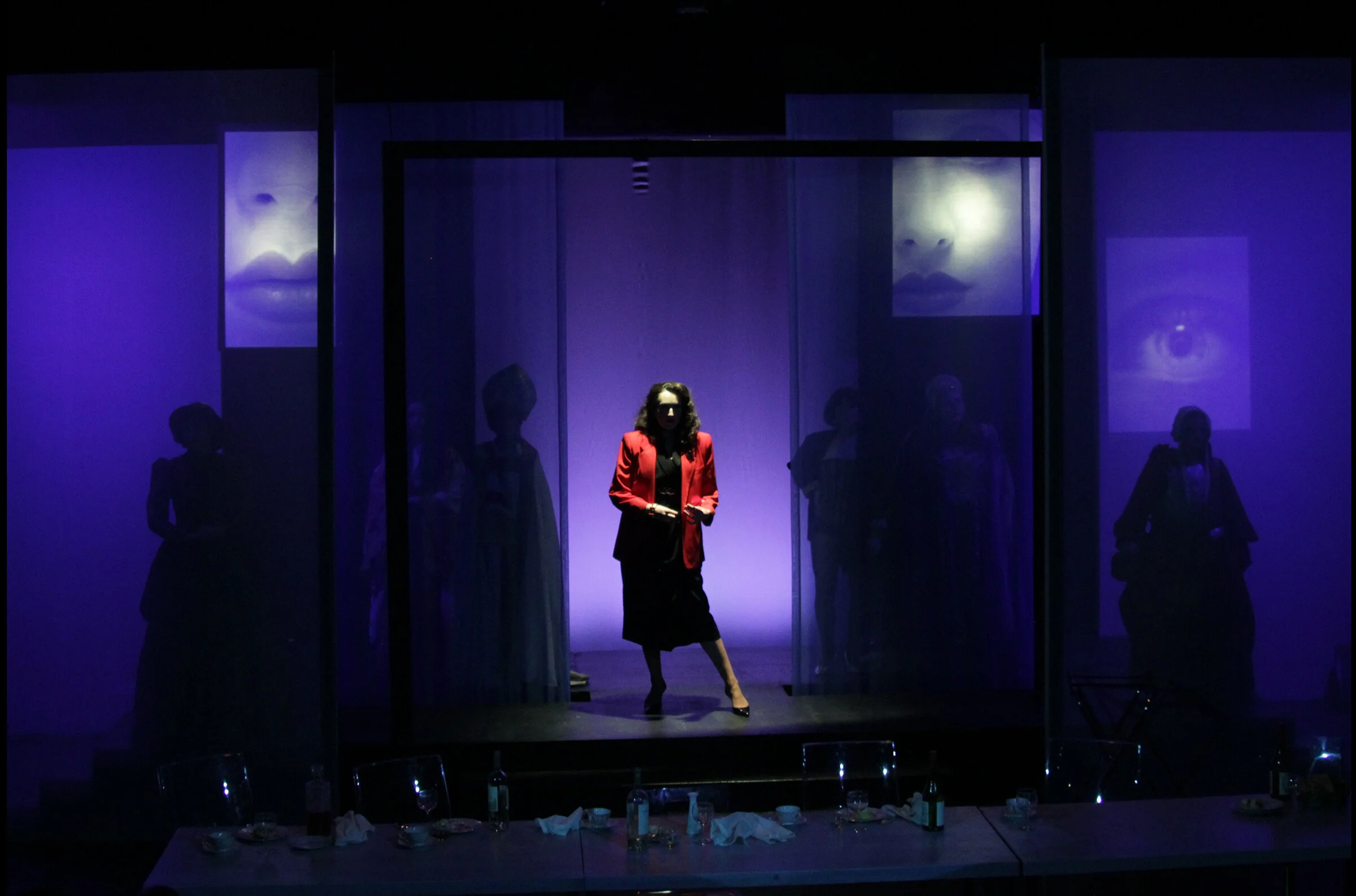
I was inspired by photographs of translucent interior rooms, mostly used for art exhibits. I was also drawn to contemporary installation of houses and rooms created in bold outline of black steel or neon light. Through my research I developed a world that had frames and translucent walls that could utilize the scrim affect to reveal and hide actors. A scrim affect makes a wall or surface opaque when lit from the front, becoming transparent when lit from behind.
For this show I was also the Lighting designer and Projection Designer. This allowed me to have full visual control over the world of the play. I used light to take advantage of the ability to reveal and hide actors through the layers of sheer fabric. I used projections of photographs and video as lighting sources. I was able to illuminate a table with a projection and create animations that made a trace or outline effect around its edges. I used video and still images to create moving clouds and shadows of leaves for the backyard setting.
For this project I learned to use Isadora, a projection software that allowed me to animate projections, create trace lines, move imagery in space, over time. I was able to create an effect where the sound volume of an actors voice caused an image to reveal an underlying photo flashing the horrors of Dull Gret’s story into the world.
Top Girls was a very exciting project allowing me to explore and experiment with new ideas in lighting and projection design.
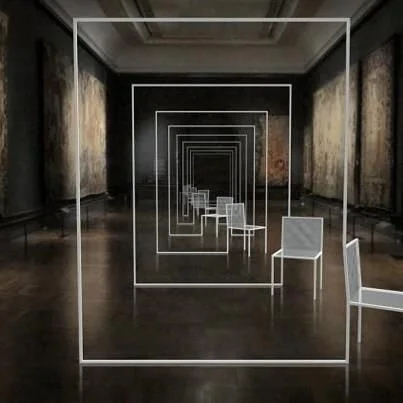
Research: I was interested in squares within squares. Ways to divide the space into frames.
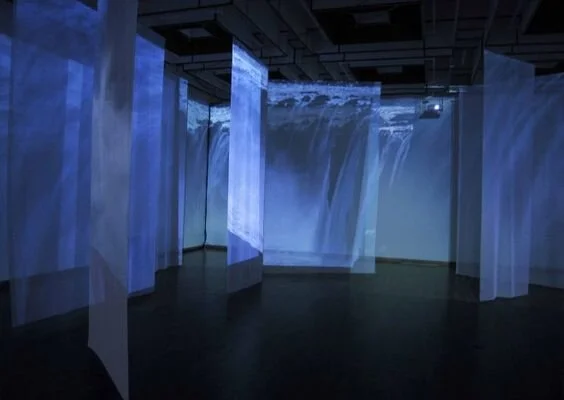
Research: To try and transform the space for the various locations I wanted to be able to bleed light through layers of the space
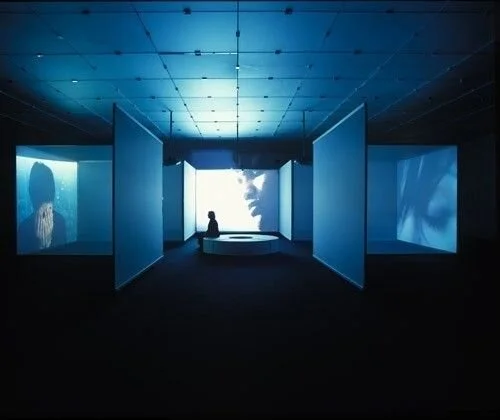
Research: This was my main piece of research. This gave me the frames, cubicles and translucency I was looking for.
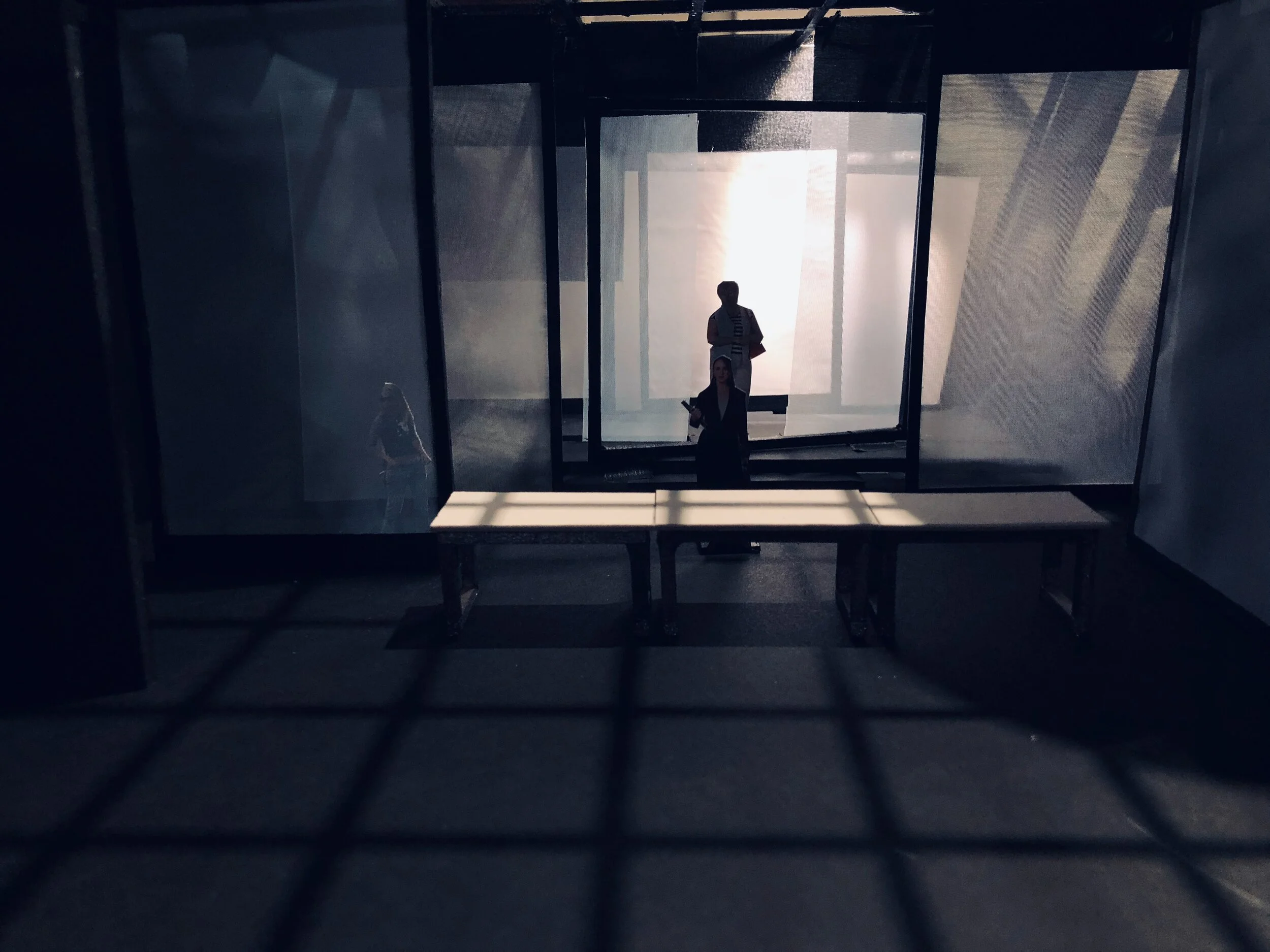
Model photo and lighting experiment
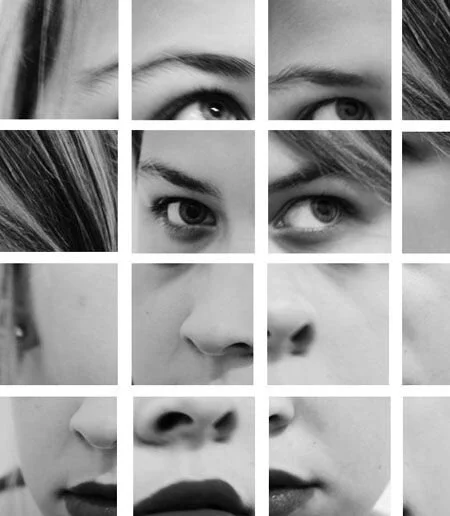
Research: I liked this fractured, modern woman. It fit with all the women Marlene was trying to be at once.
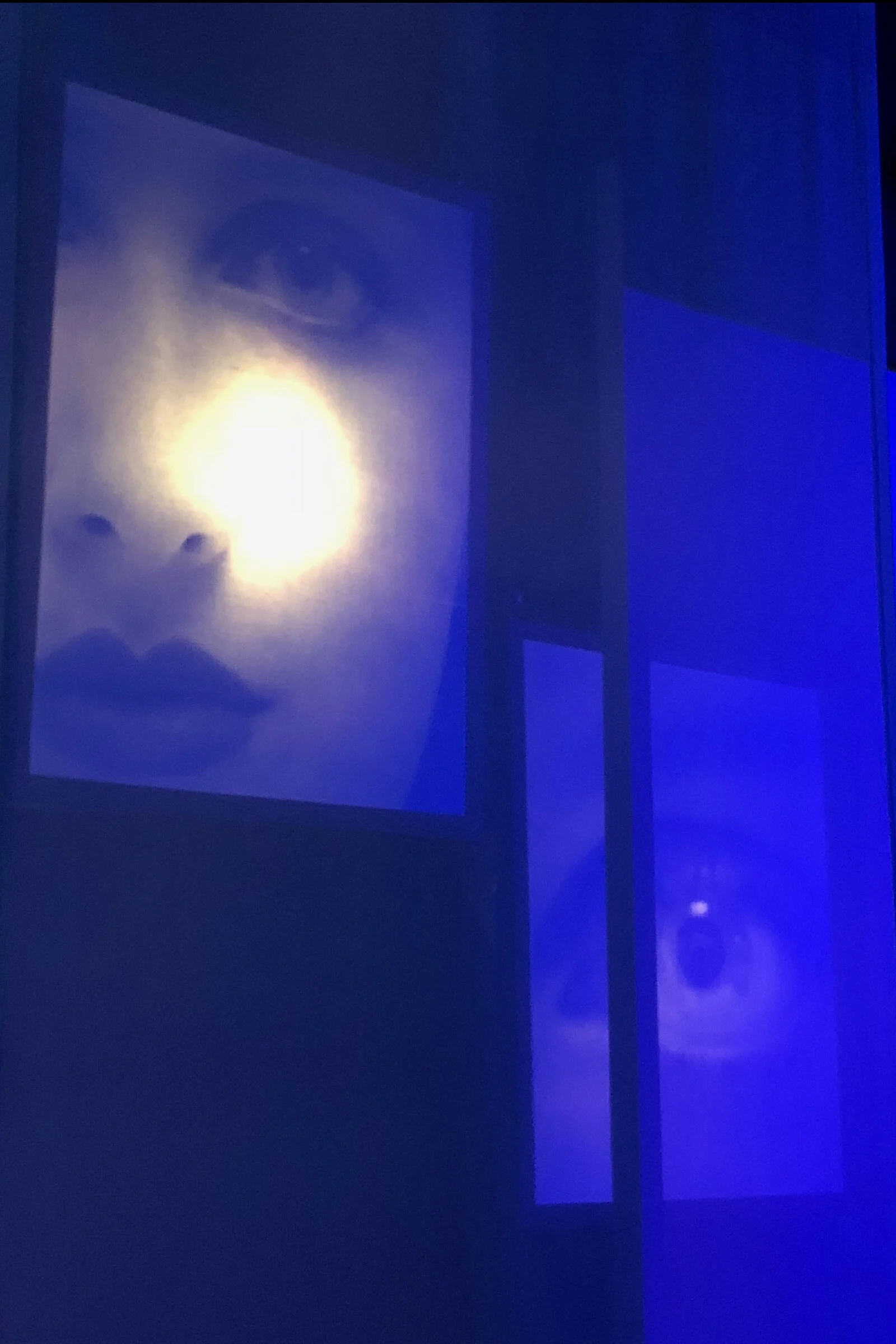
I used the actors portrait as light boxes. These could illuminate and be seen through the layers of screen.
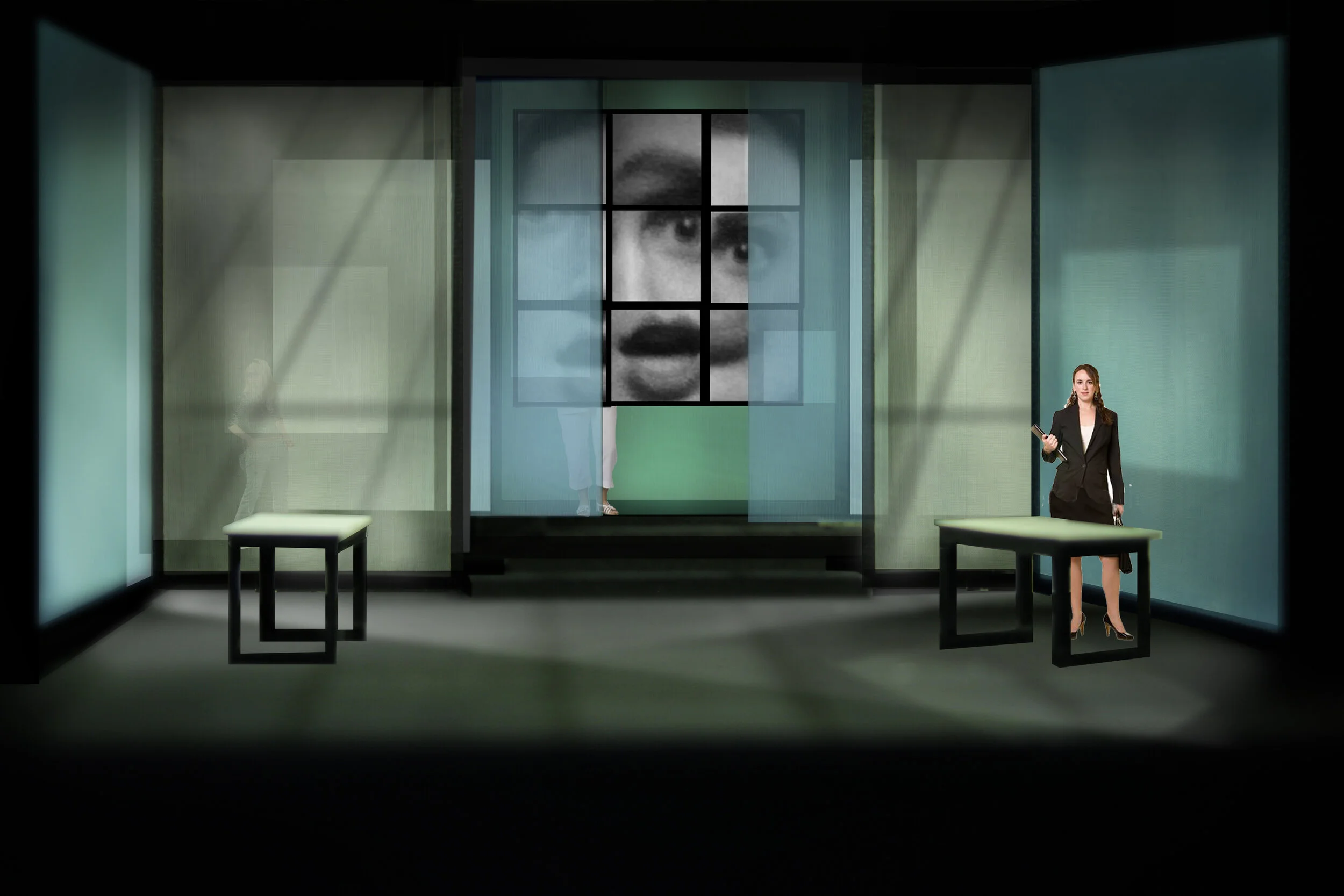
Concept rendering: Office space
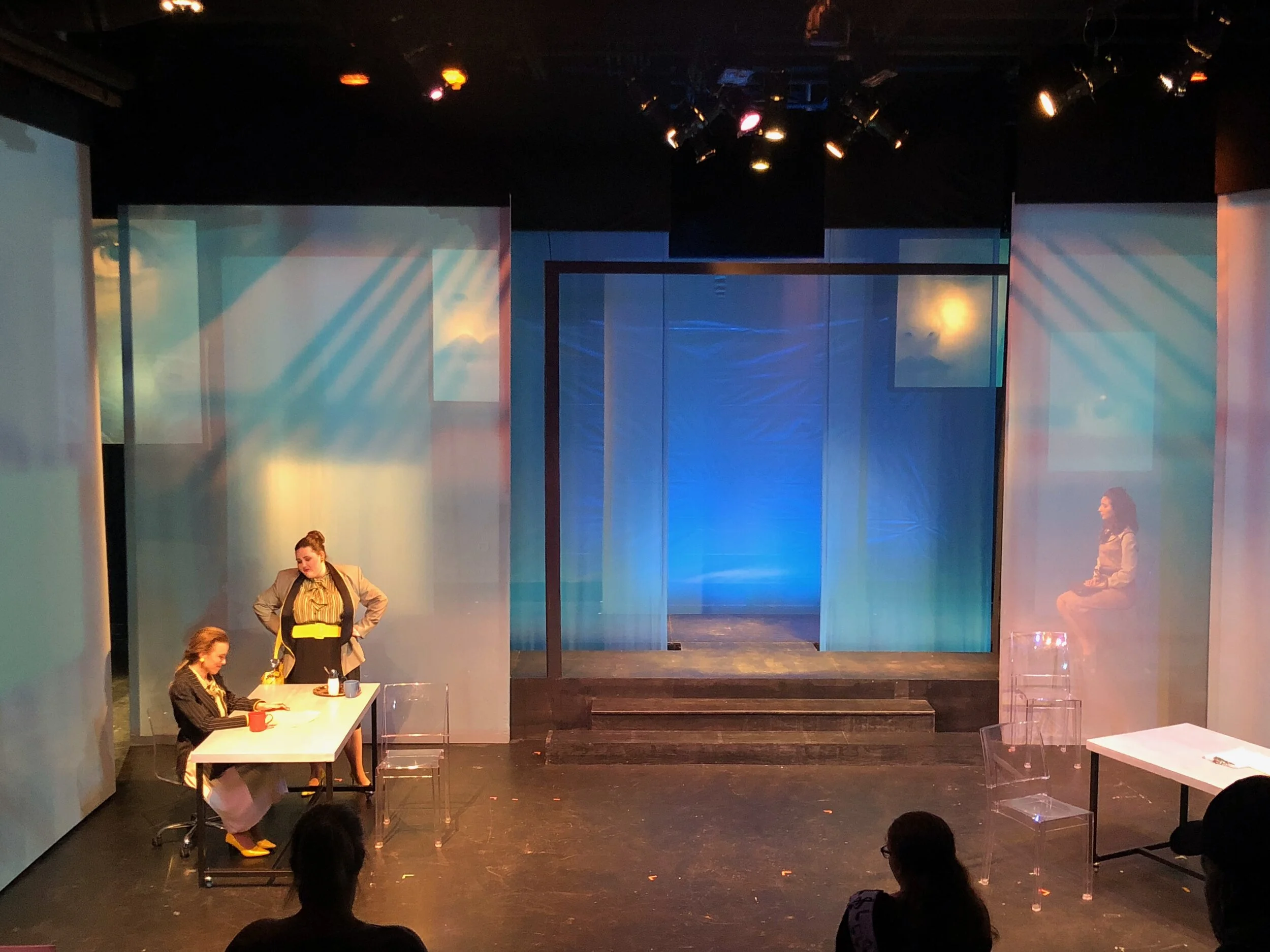
Production Photo: Main office
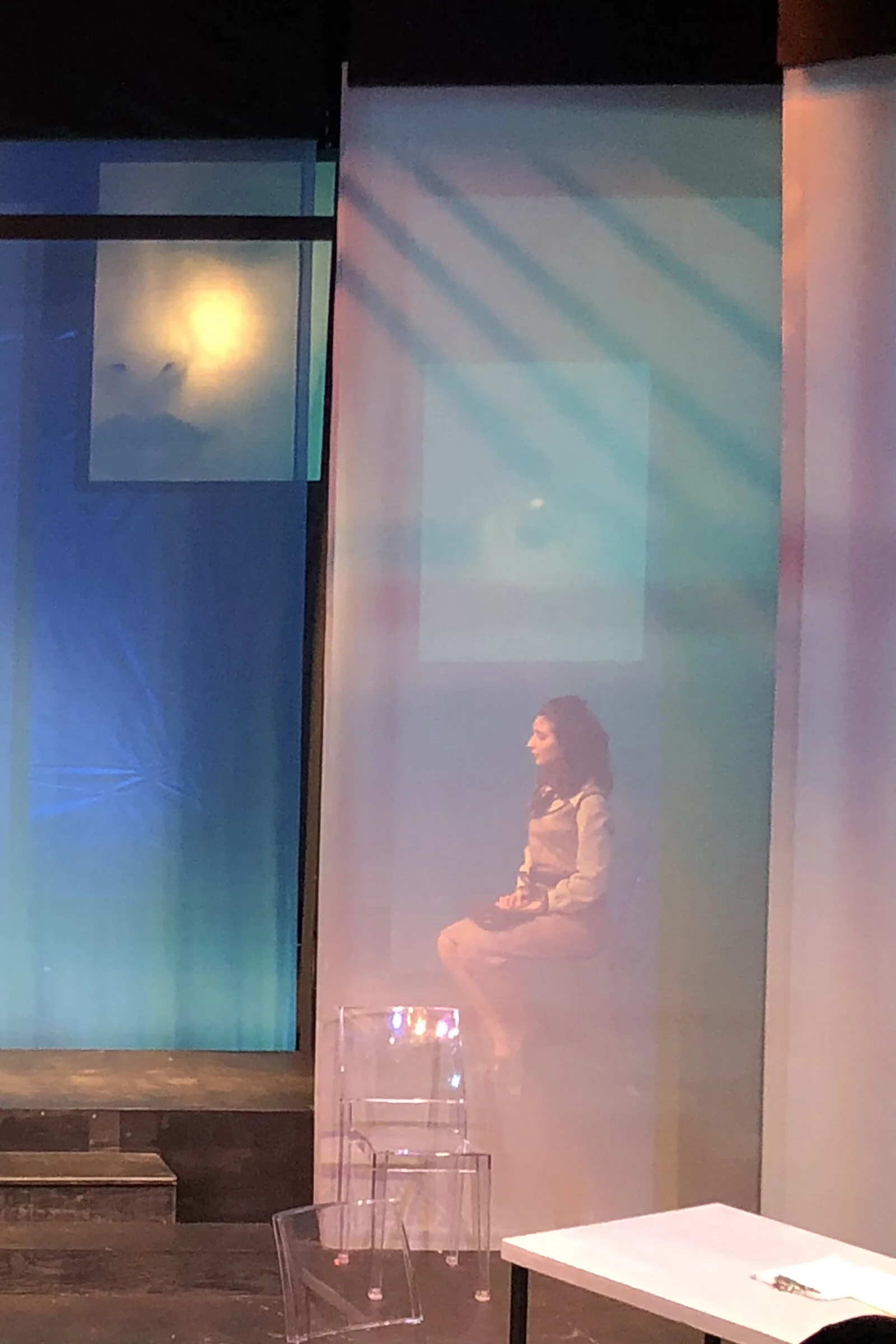
Prod photo- detail showing Marlene's face as a ligthbox and how the actors could bleed through the fabric walls.
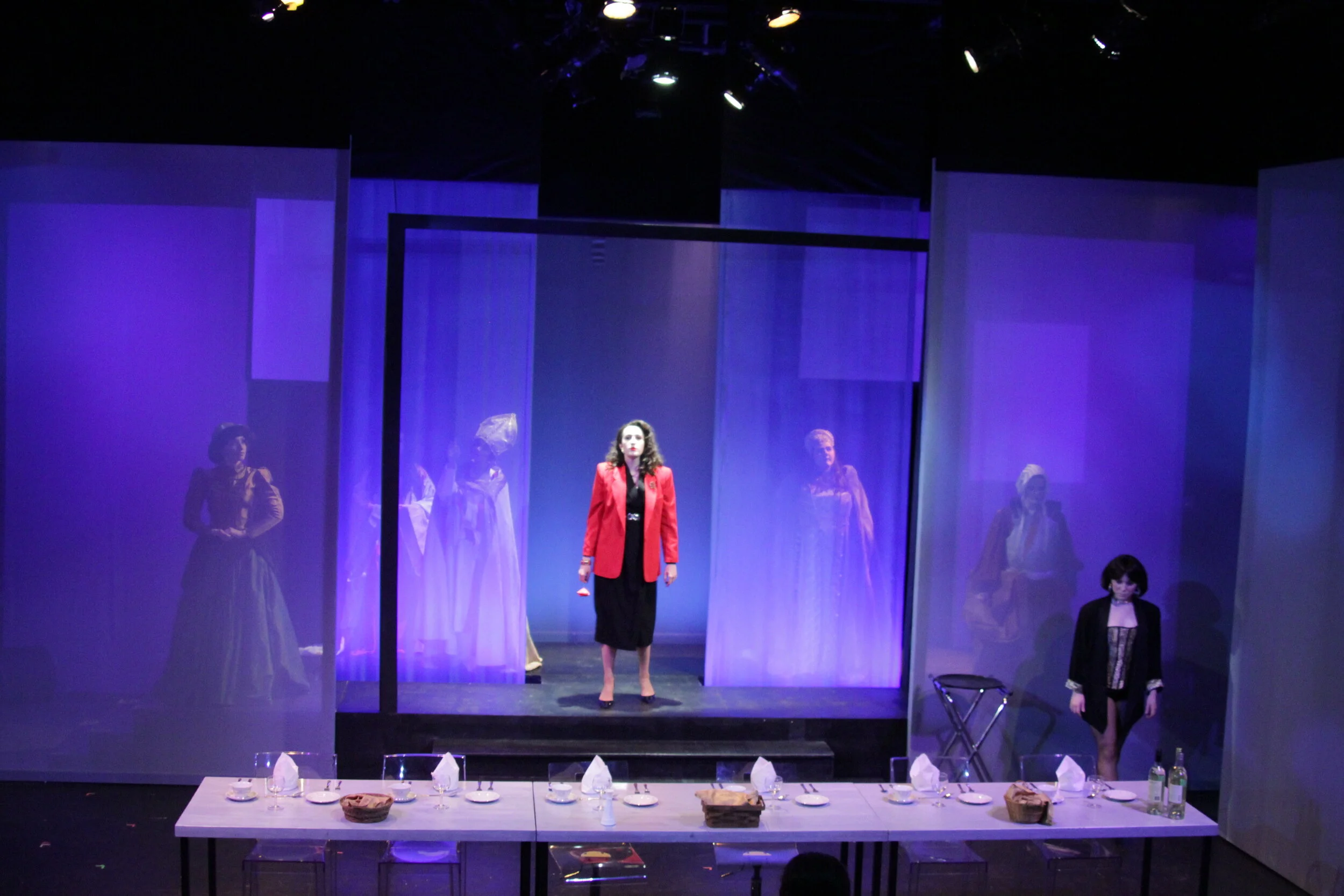
Prod photo: Dinner Party. Historical women figures enter Marlene's dream for a raucous conversation
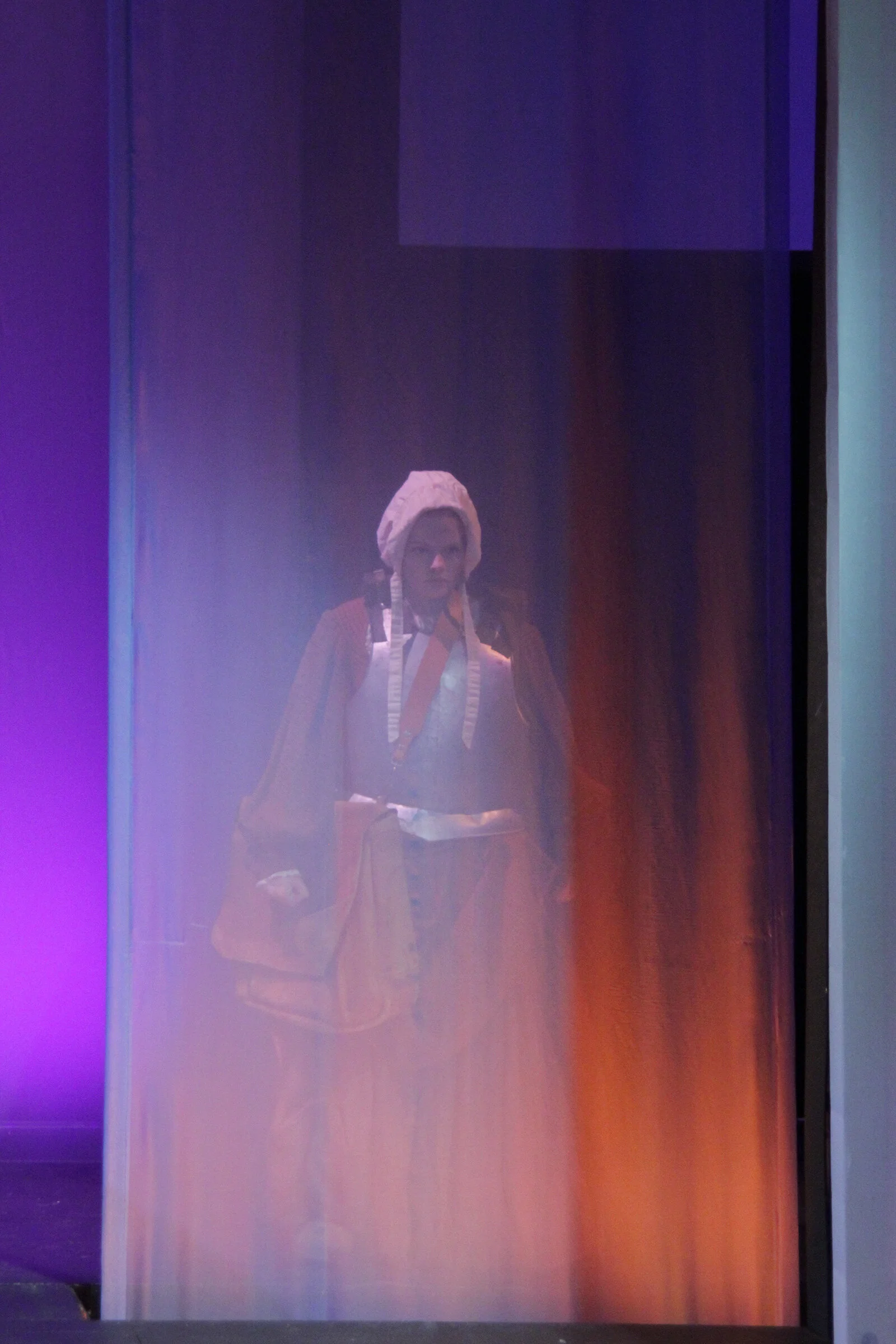
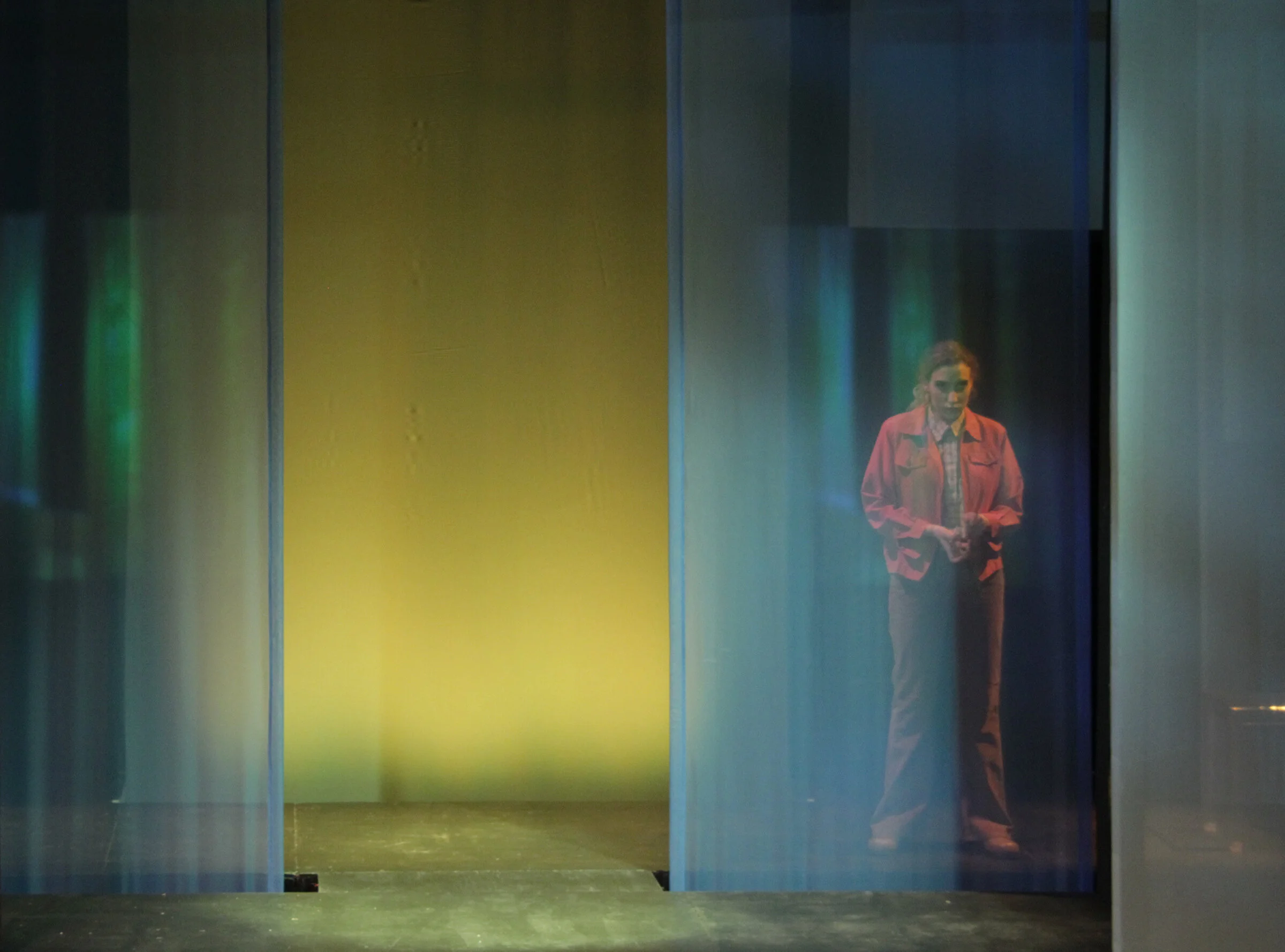
Prod photo: Dull Gret bleeds through the fabric when she speaks
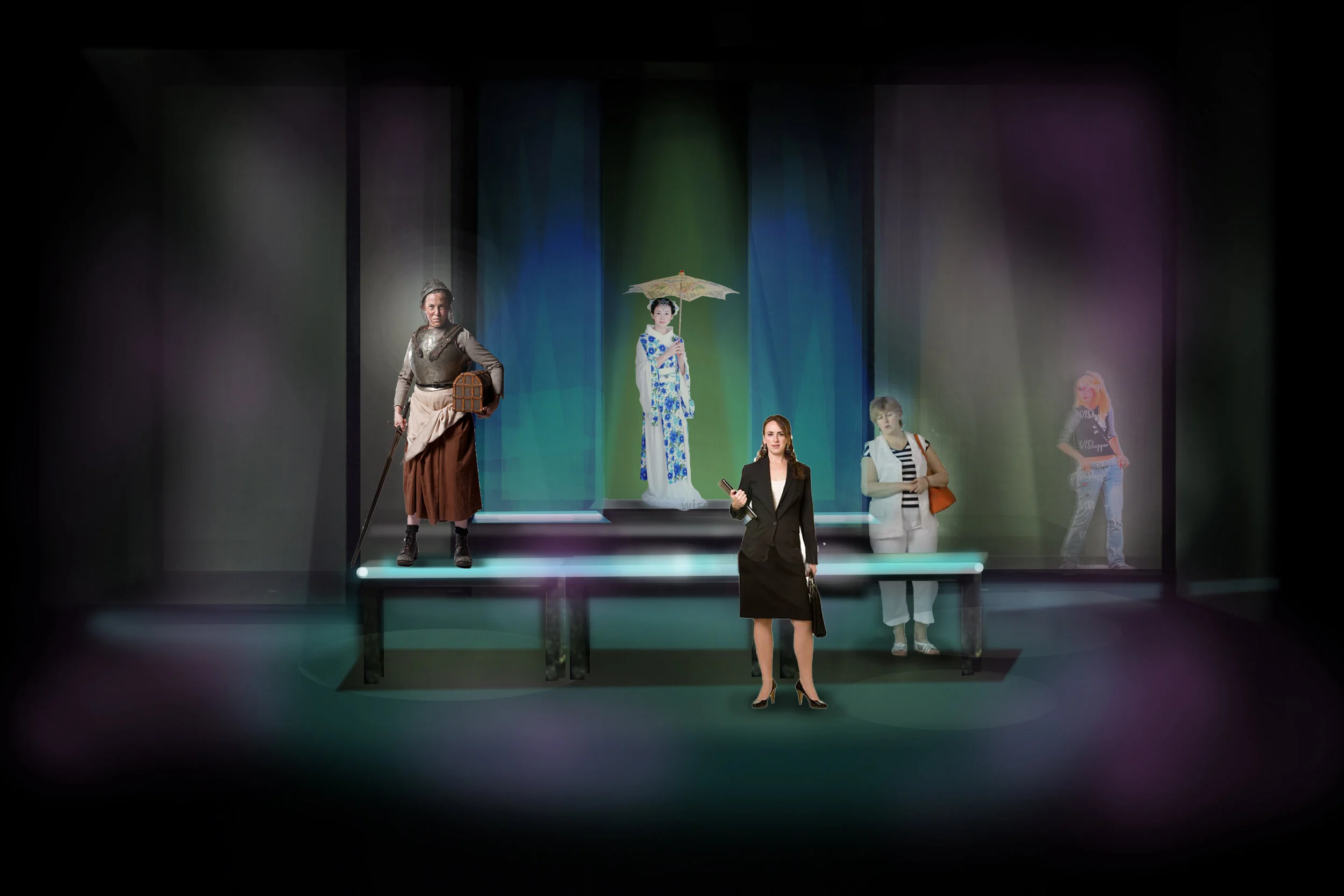
Concept Rendering: Dinner party
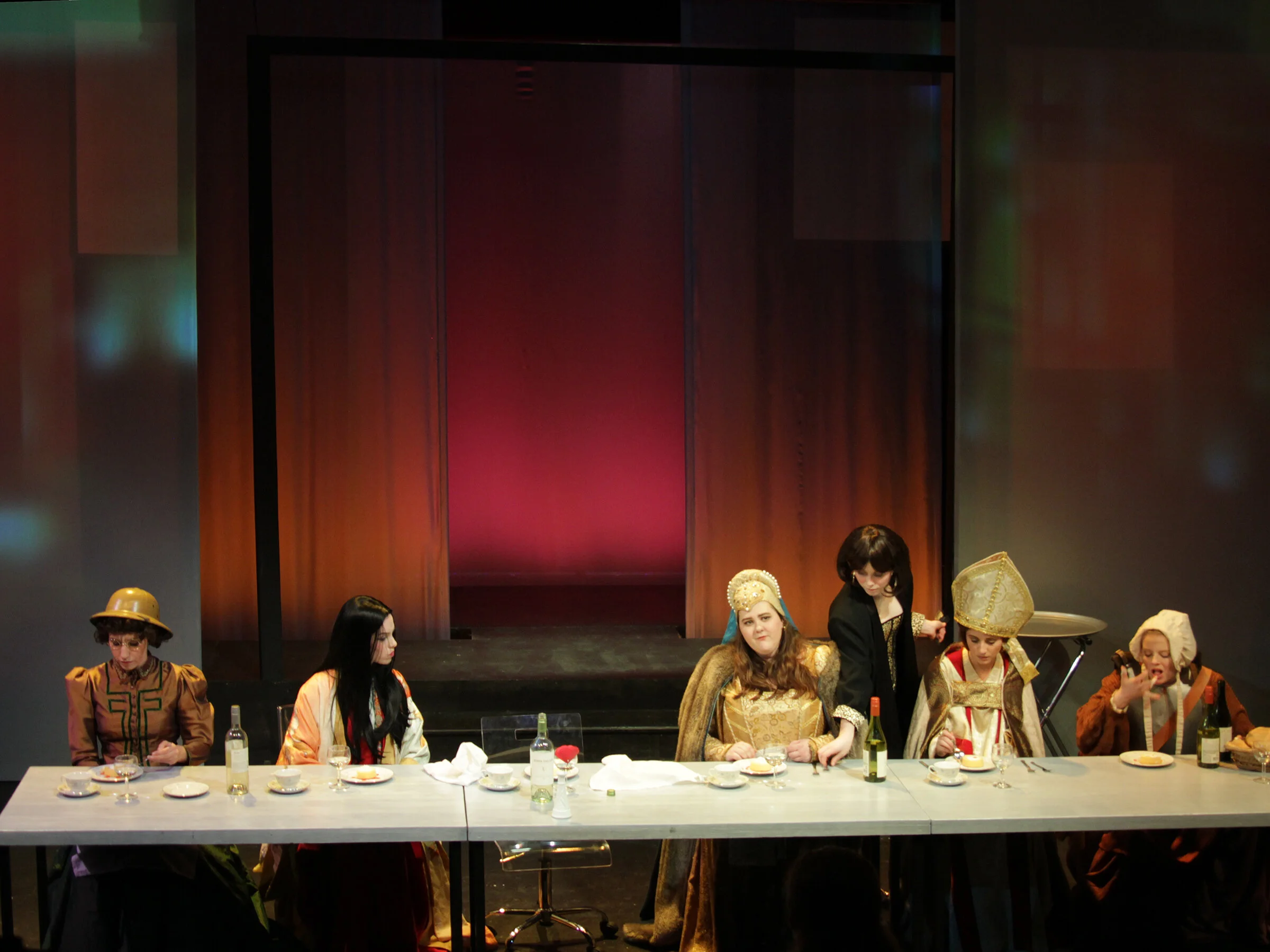
Prod photo: dinner party
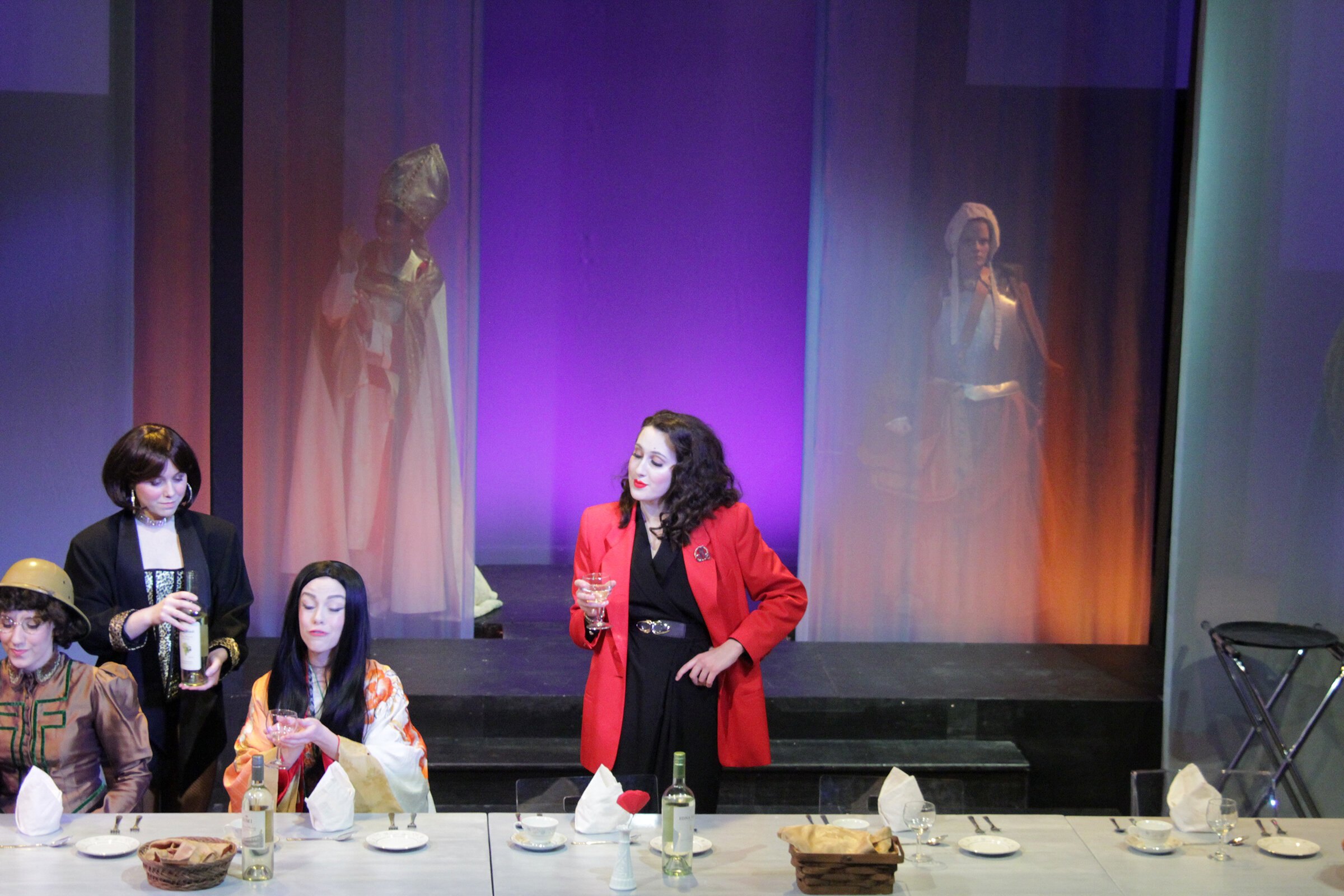
Prod photo: dinner party
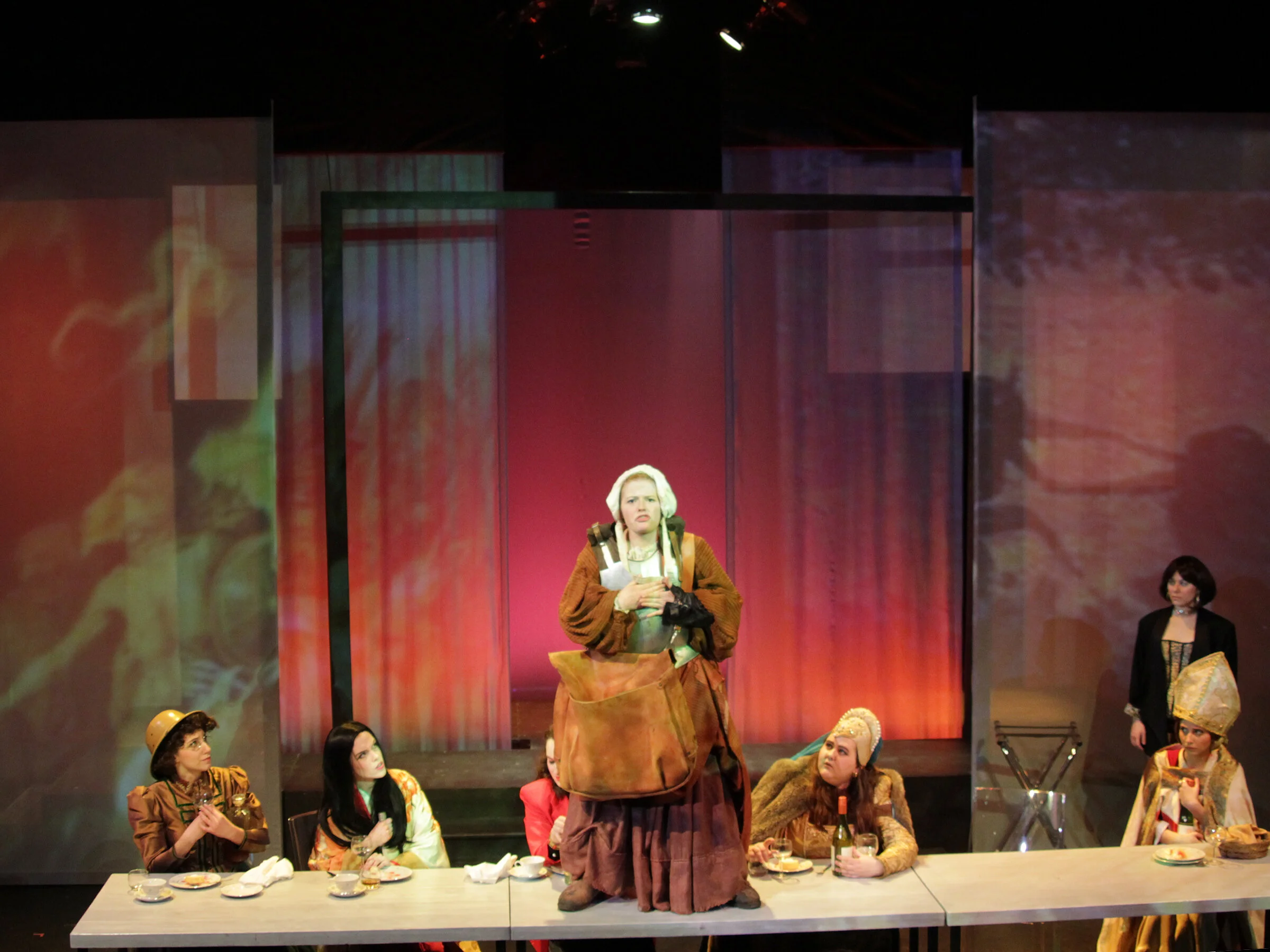
Dul Gret's tale. I used projections that were sound activated. I used Heironymous Bosch imagery as the background for her story. When she would stomp on the table, the images would disappear then fade back in.
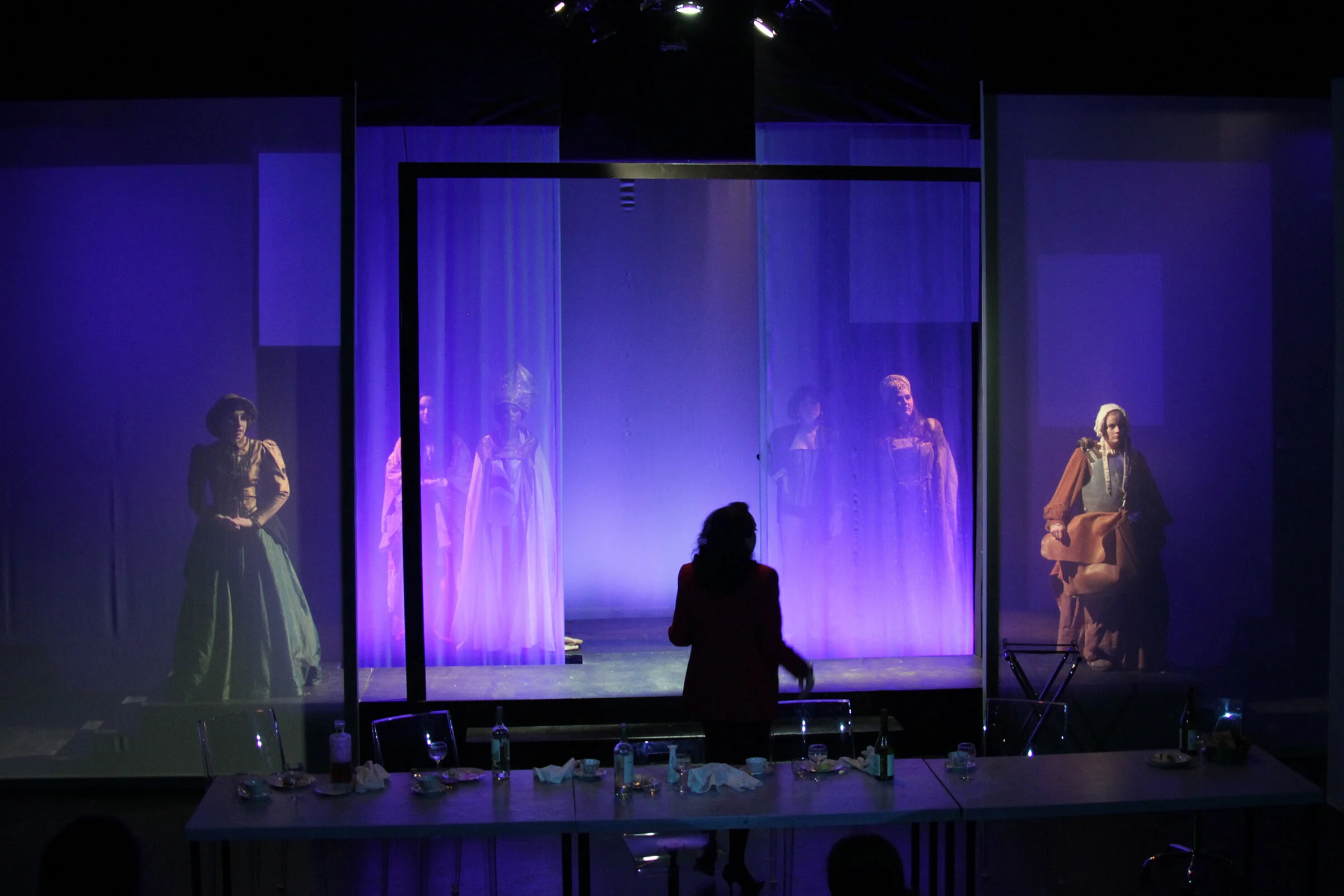
Translucency revealing characters
Prod photo
Prod photo-in the kitchen
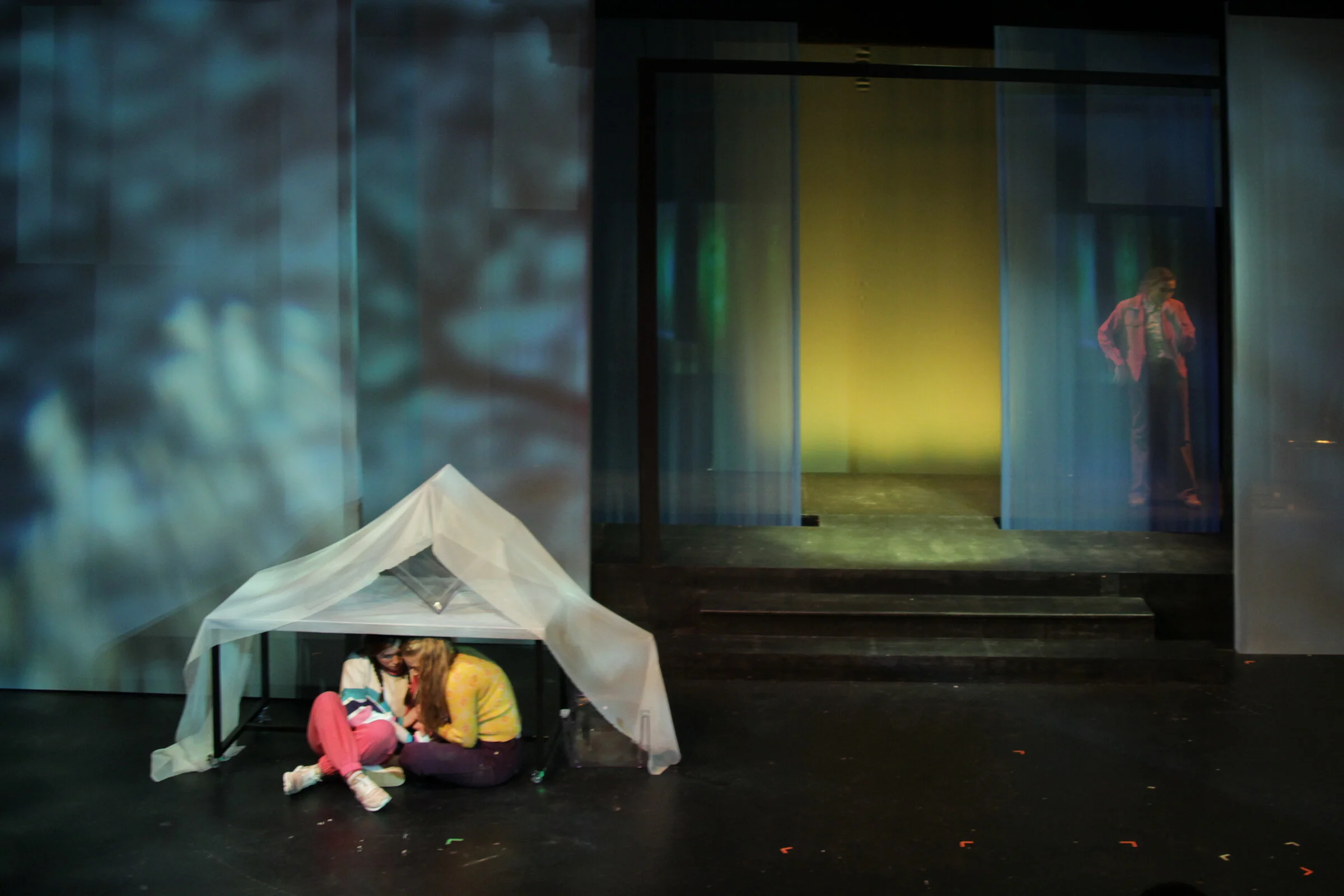
Prod. photo- in the backyard
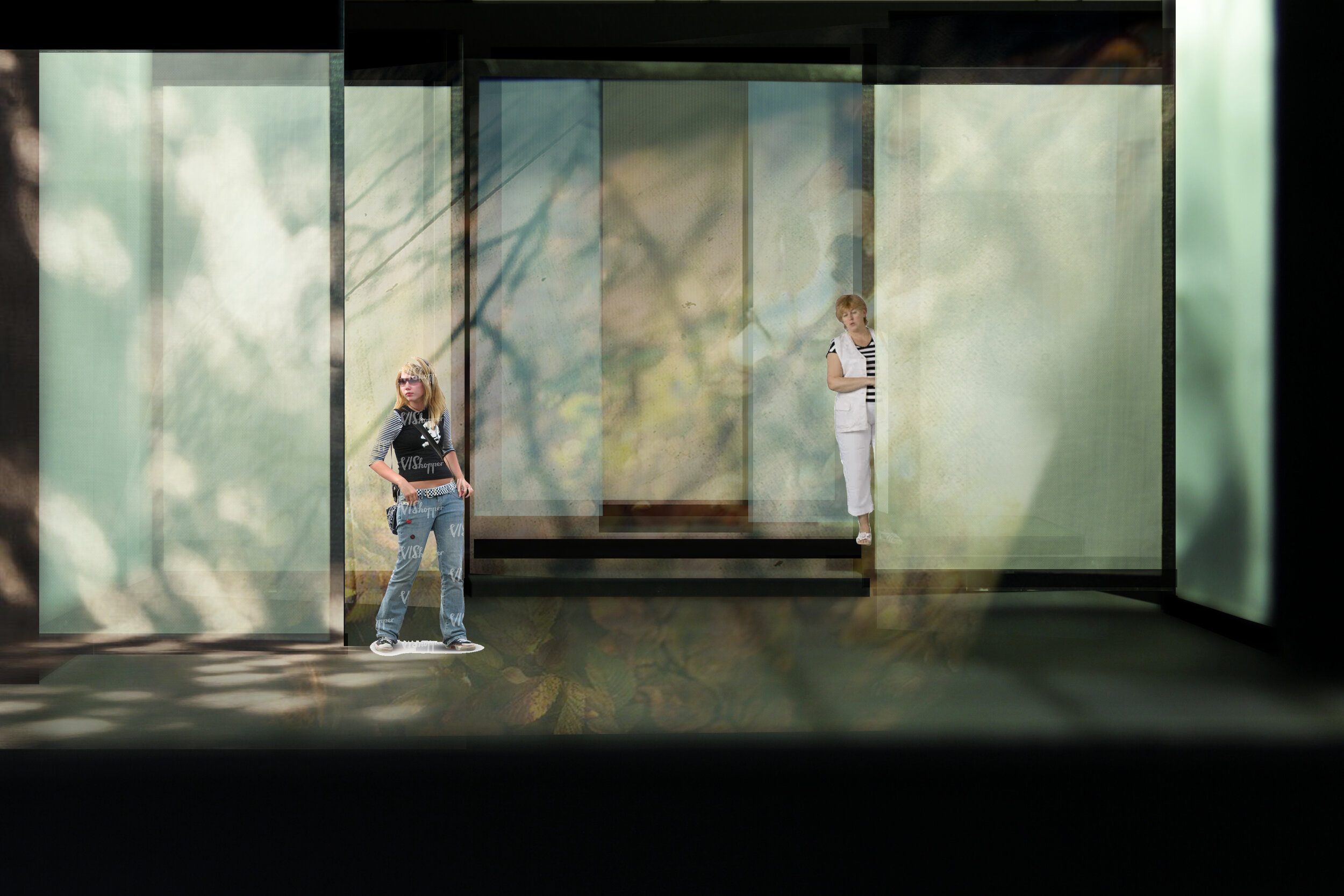
Concept: backyard