Curious Incident of a Dog in the Nighttime
SUNY Cortland Performing Arts Spring 2020
Lab Stage
Curious Incident is the story of an autistic boy named Christopher who sets off on a quest to solve the curious murder of Wellington, the dog next store. On his journey, the audience bares witness to the working of his mind, his dreams, his fears and his fragmented reality.
The original Director wanted to utilize a directing technique called viewpoints. This technique “is used to focus actors’ awareness on different elements of performance (tempo, duration, gesture, spatial relationship.)” This style gave each actor a varied response to the action unfolding. This also reflected the inner workings of Christopher’s brain. As his thoughts are reacting to the stimulus of his environment his actions change in tempo direction ad gesture.
The design was based on a gridded cube, based on his love of order and prime numbers. The concept was to create a highly ordered space that fragmented as Christopher discovered new truths about his life. These truths fragmented his ordered reality.
The squares were designed to both capture projection images giving the audience location clues and to let light pass through to allow characters in his mind to bleed in and out of the reality of the space. This was achieved by stretching each square with translucent black fabric, dusting it with silver paint for reflectivity while maintaining the translucency. The squares were then covered with a glossy plastic film to create a reflective cube interior.
The floor had a pathway of squares that would illuminate red to show Christopher’s path inside the train station. In order to cope with the chaos of the station he had to methodically recite the directions. As we walked the pathway illuminated for him. To achieve this affect we used hockey glass. This supported the actor’s weight. We tinted the glass with car window tint to match the black floor and used high gloss clear paint on the floor to try and match the glass. The deck crew had to vacuum and hand wash the floor each night to try and maintain the gloss finish.
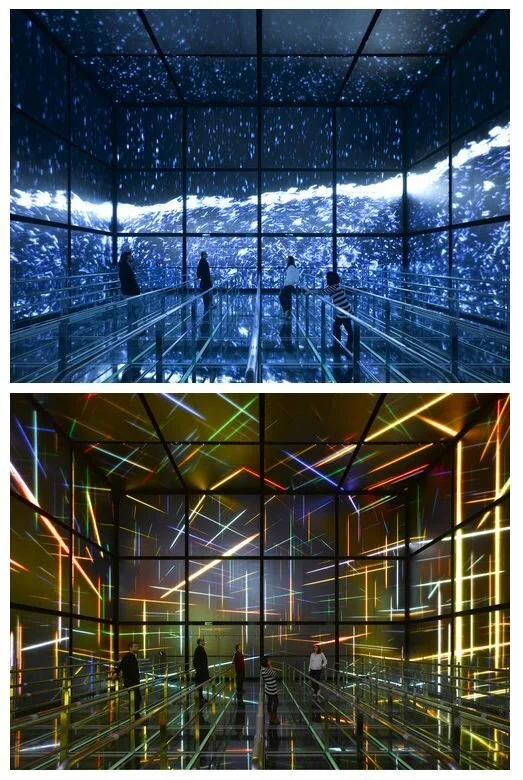
Research- The gridded cube was a strong influence on the design. Christopher loves order and prime numbers.
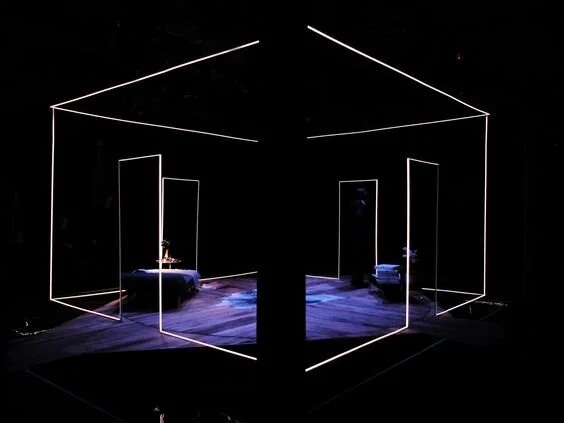
Research: the outlined, illuminated room and Doorways.
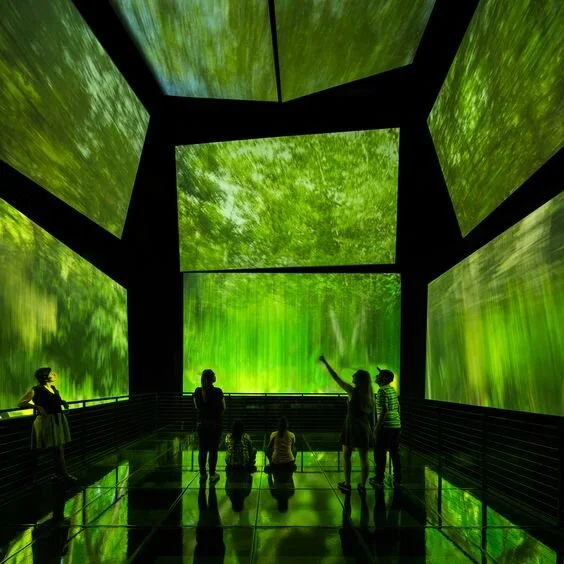
Research: as the play progressed and his ordered reality was fractured by the discovery new information, I wanted his physical cube to break apart.
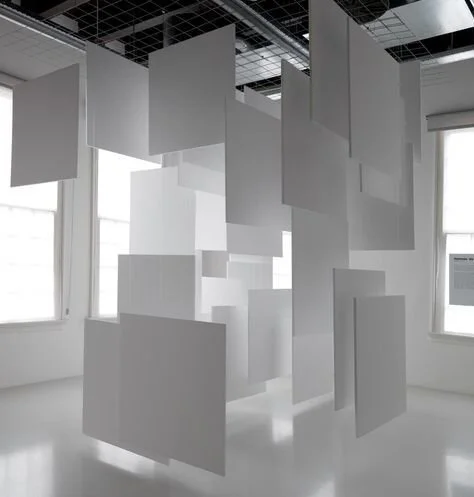
I wanted each panel or section to slowly break away and show the cracks of the outside world.
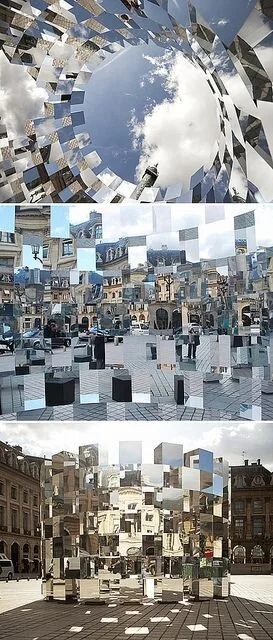
This is a great example of breaking apart, yet reflecting back.
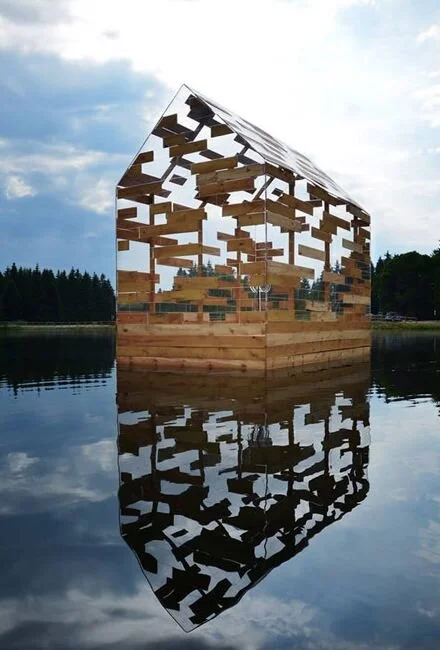
The end result would be a broken space.
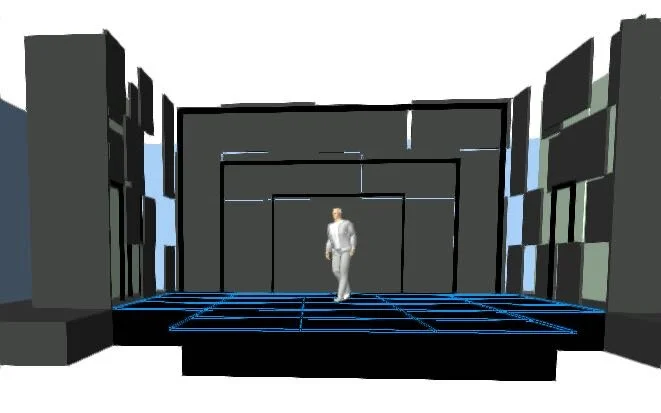
Concept art: start with a grid that breaks apart in pieces, like a Tetris.
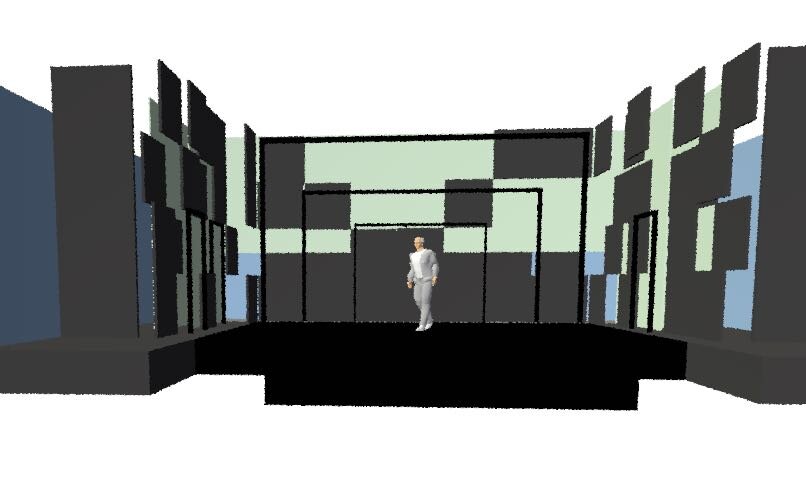
Concept art: By the show's end, the walls are completely fractured.
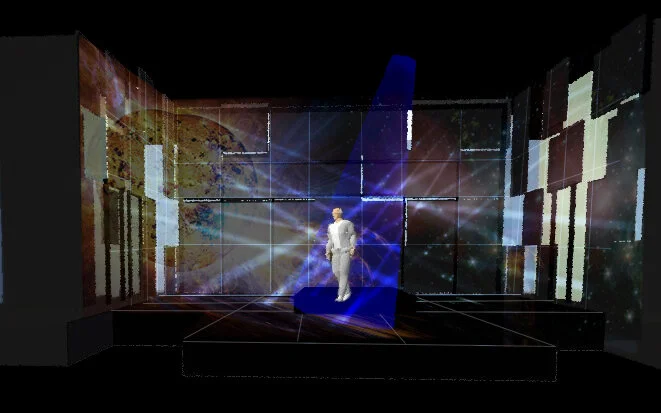
Concept art: projections would give us clues to location, while light played with the space shining through the walls
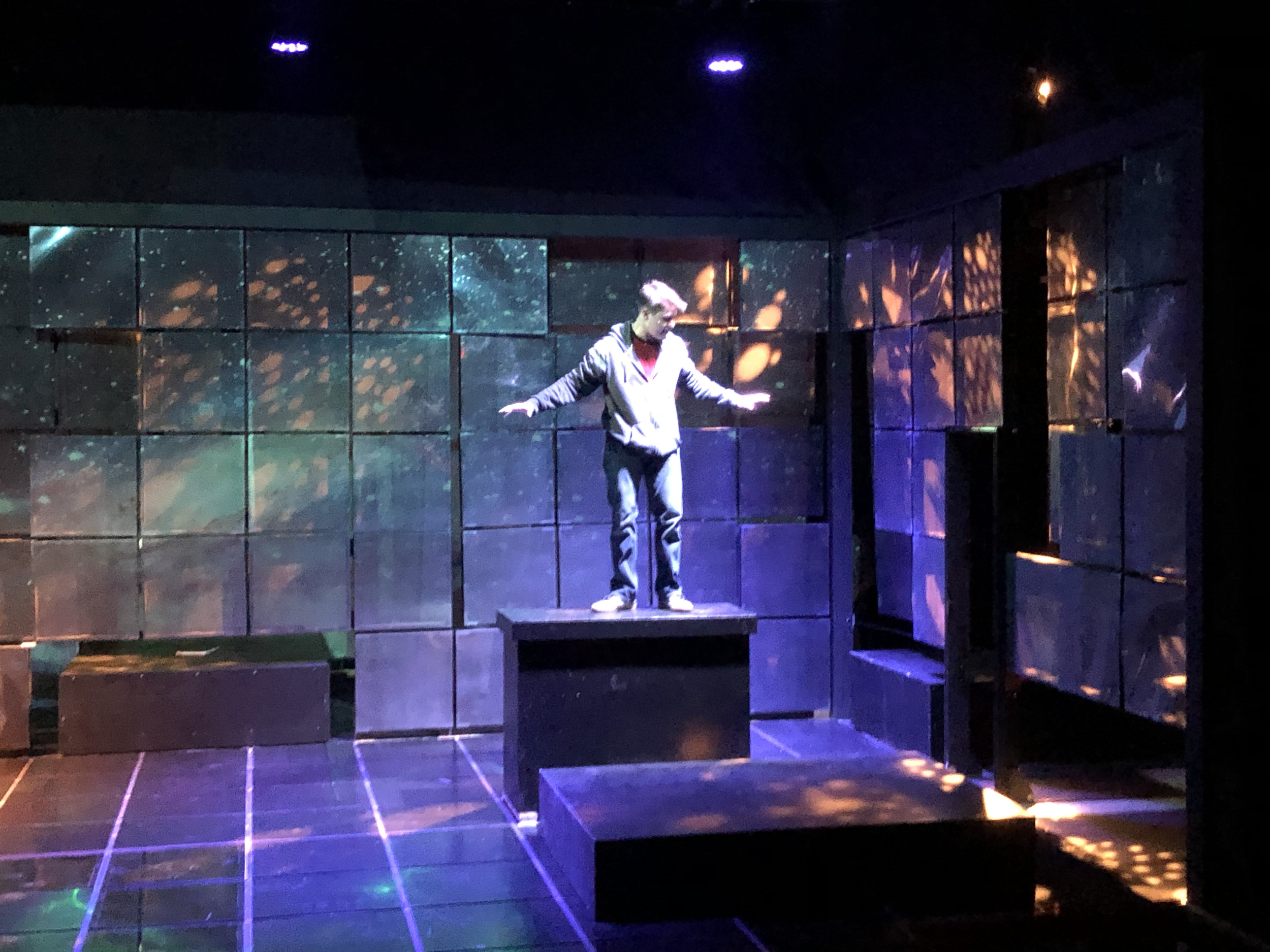
Prod. photo: Christopher in space, his safe place. The walls have begun to fracture. The light breaks through the walls. Projections give us locations.
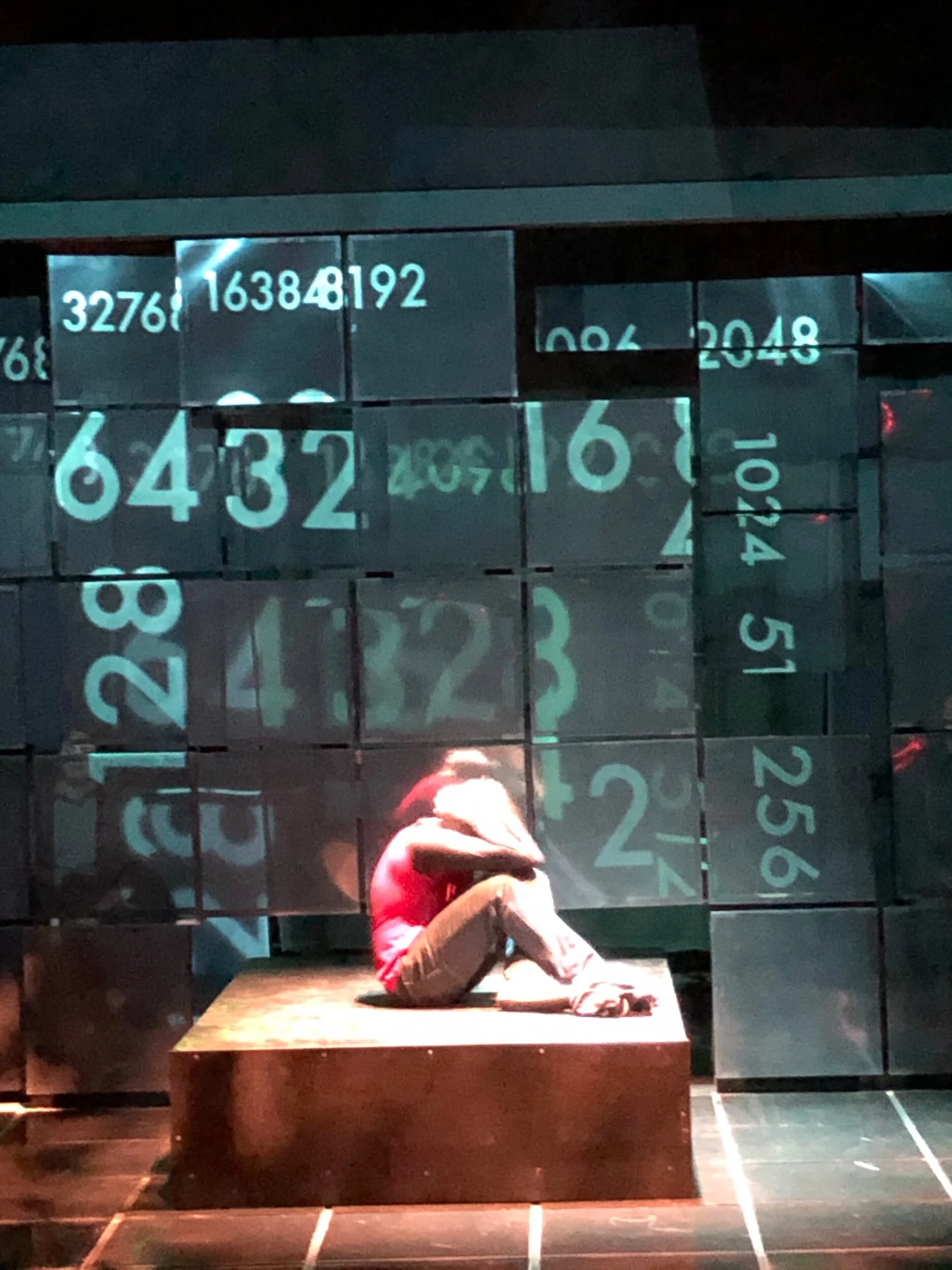
Prod. photo: Christopher recites prime numbers to cope with stress.
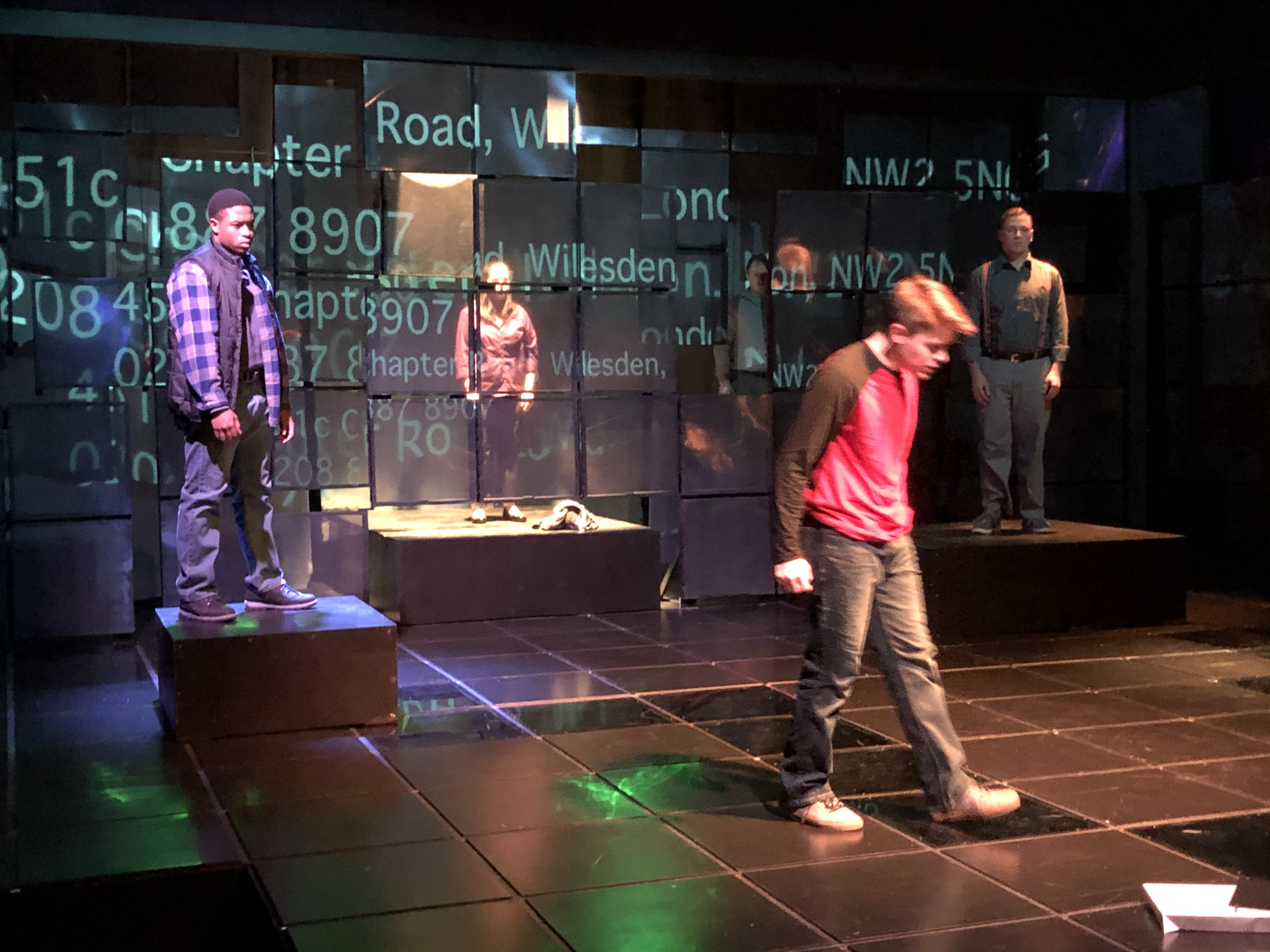
Prod photo: Christopher recites his Mother's address. He thought she was dead. The walls and light effect allows the actors to bleed through the set and projections As if we're seeing inside his mind.
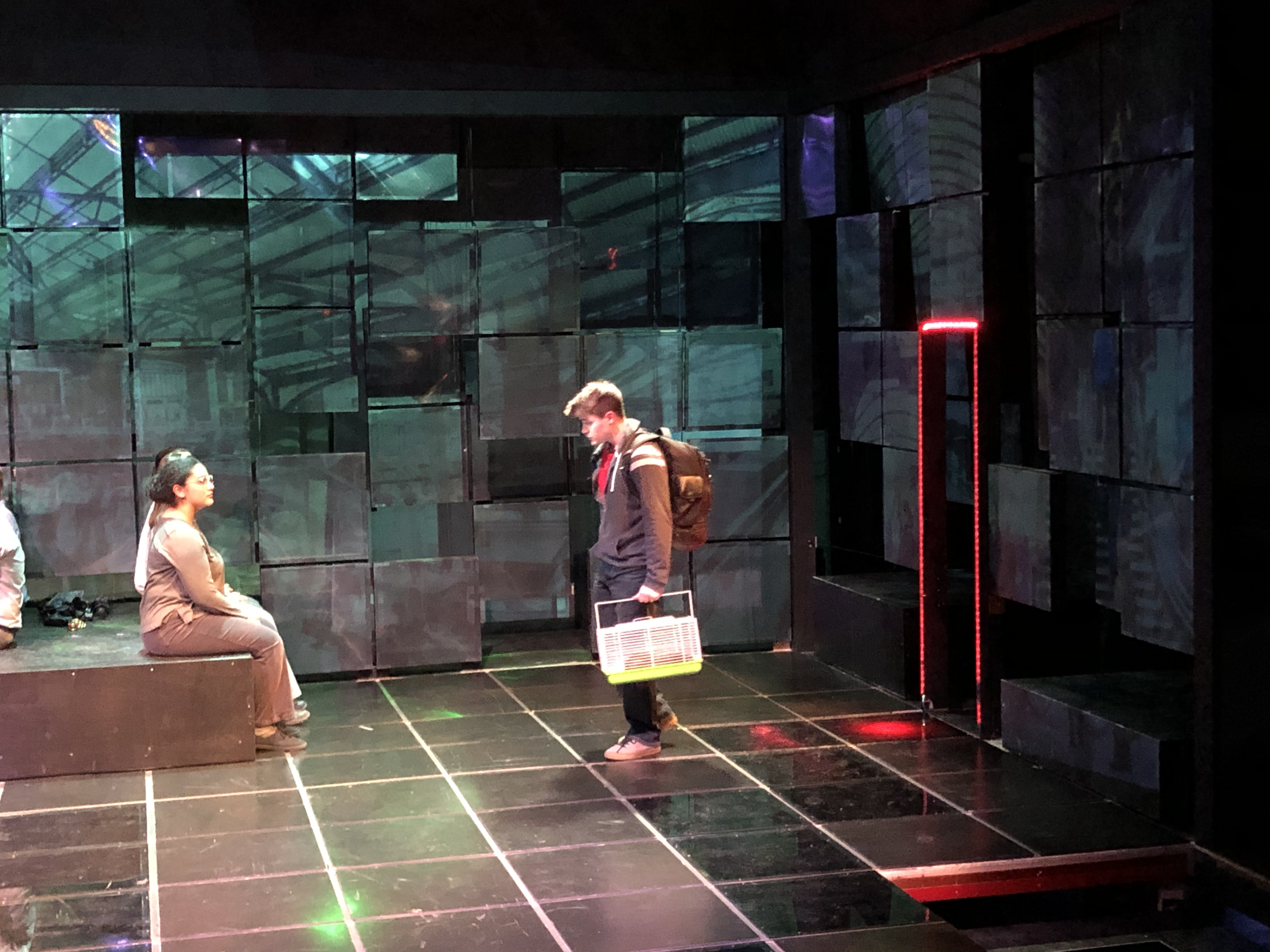
At the train station. The floor and Doorways illuminated in red to create a pathway as Christophers recites the directions. He is trying to drown out the noise and chaos of the station
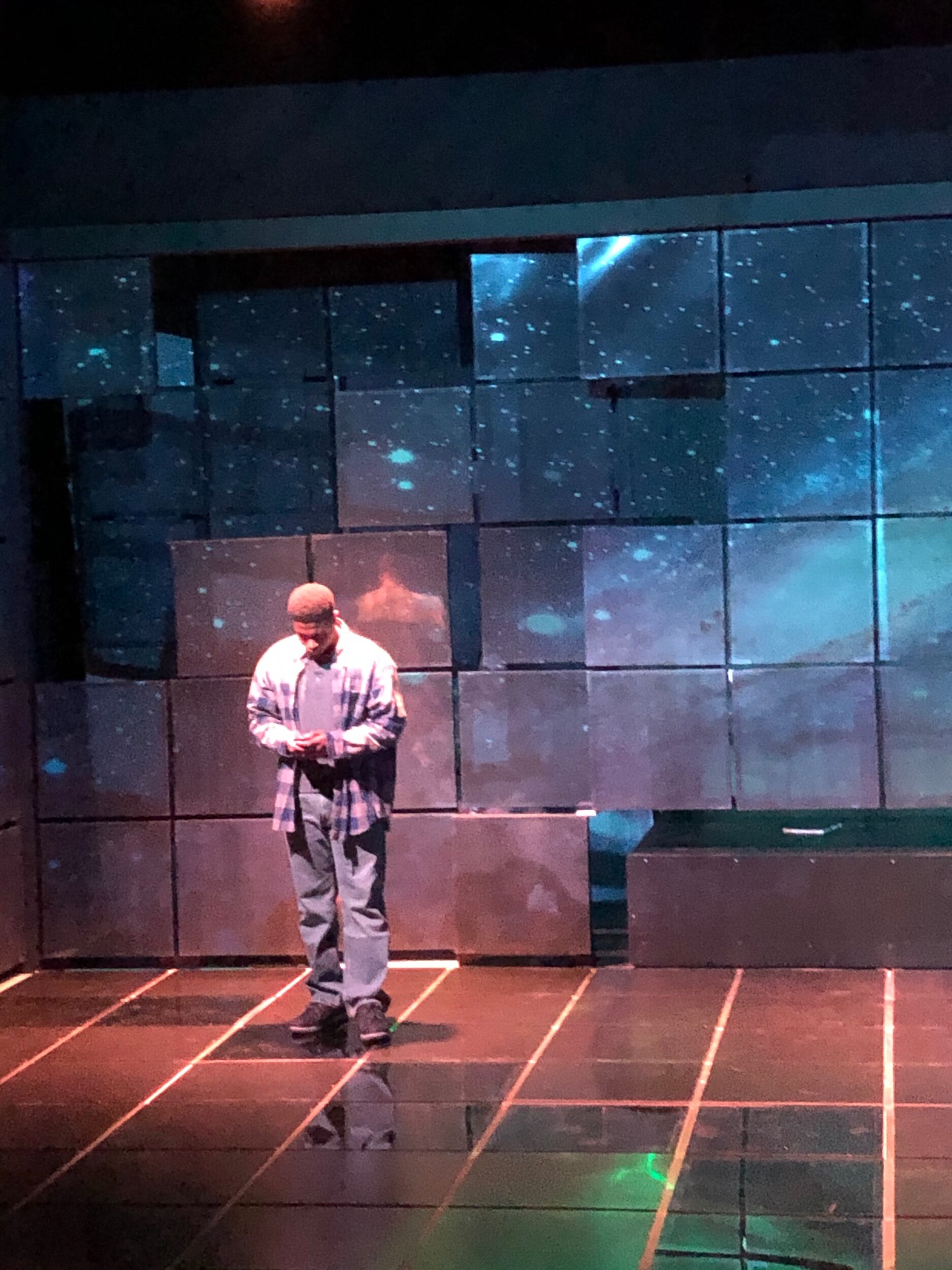
His Father waits in his memory.
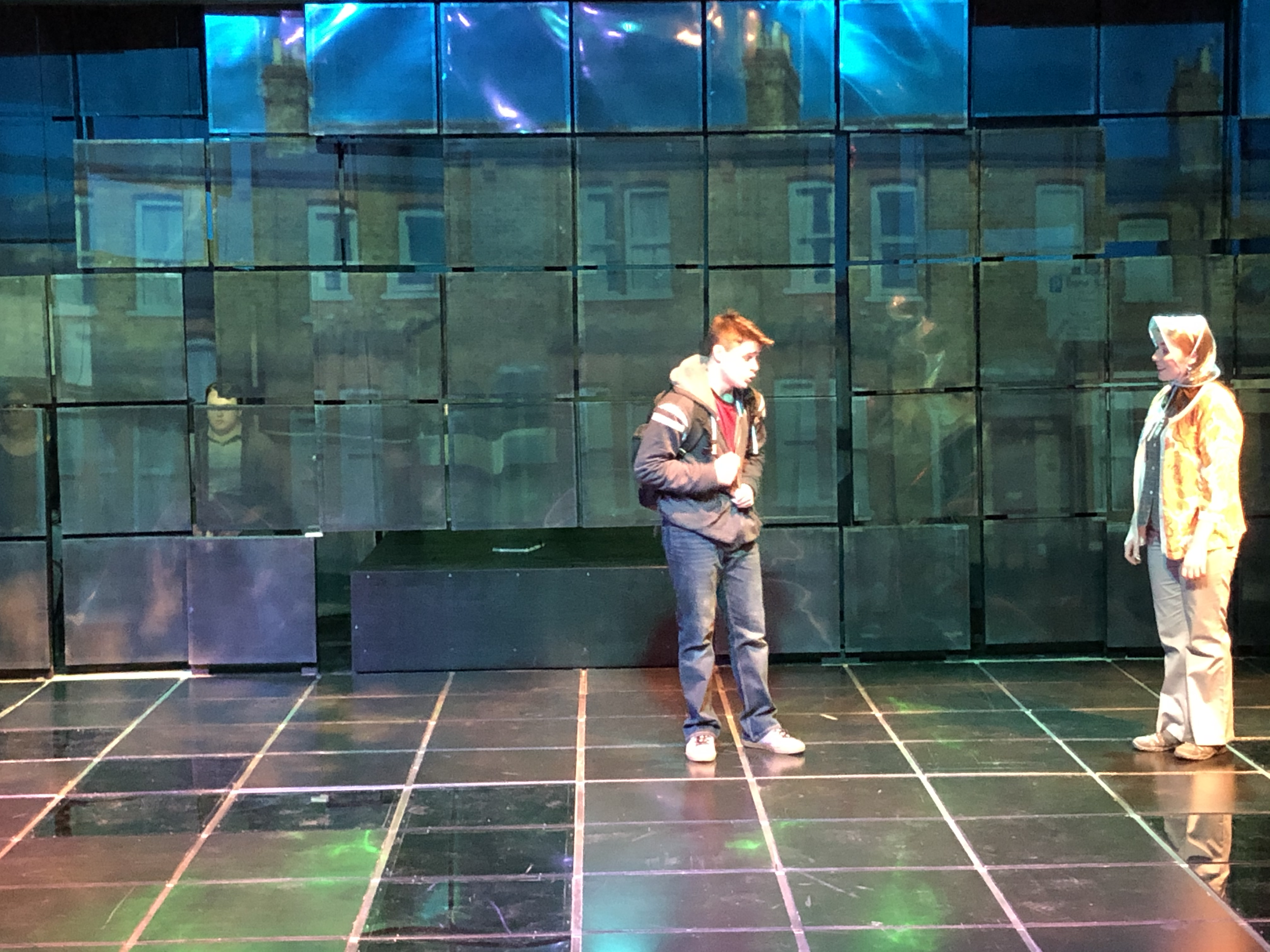
Neighborhood street: Christopher is trying to find out who killed Wellington, the dog.
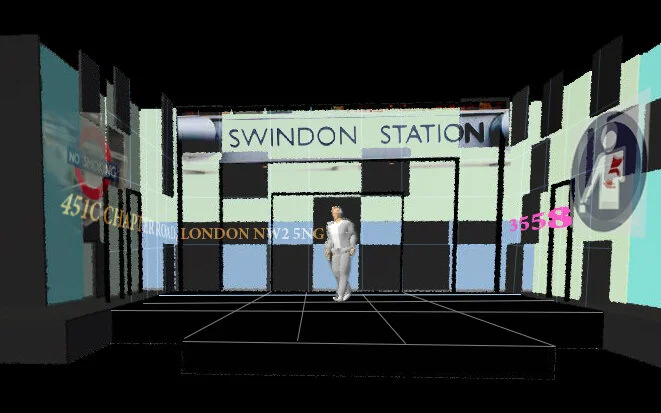
Concept art: The train station causes a major fracture in his world.
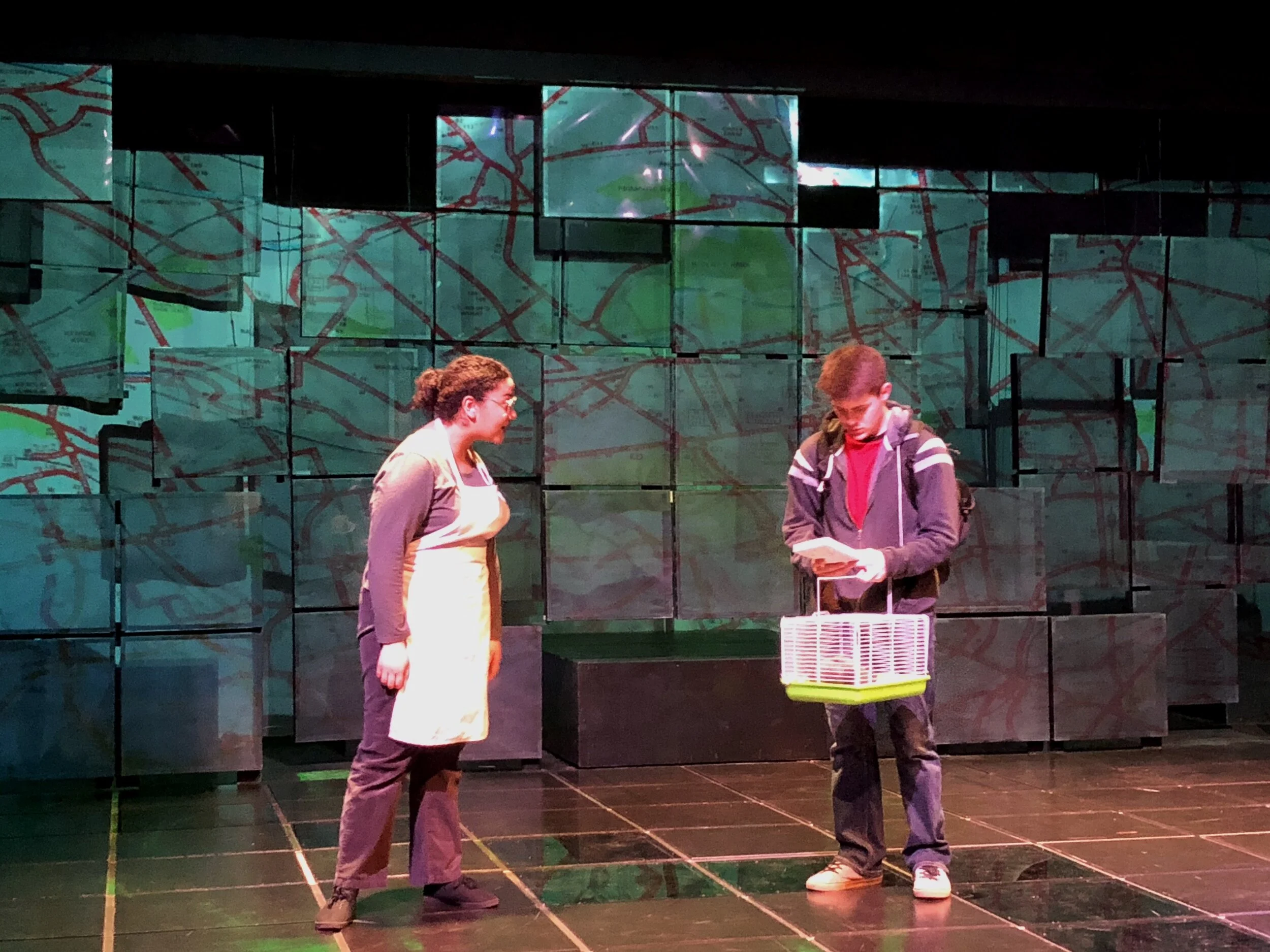
At the train station, Christopher buys a map and asks for directions to find his mother. His world is very fractured.