Lysistrata
SUNY Cortland Performing Arts Fall 2020
Dowd Main Stage
Lysistrata is an Ancient Greek comedy written in 411 BC by Aristophanes. It is the quintessential battle of the sexes. The women of Greek city states at war with each other, mainly Athens and Sparta are tired of their men going off to war so the decide to take over the city treasury and abstain from sex until their men make peace. This is a raucous, bawdy comedy that is highly sexually charged.
For this design it was important for me to return to the roots of Western theatre, the Greeks, and look at their style of theatre and also to give nod to the great Scenic Designers of the past, namely and Adolph Appia’s iconic and grand designs.
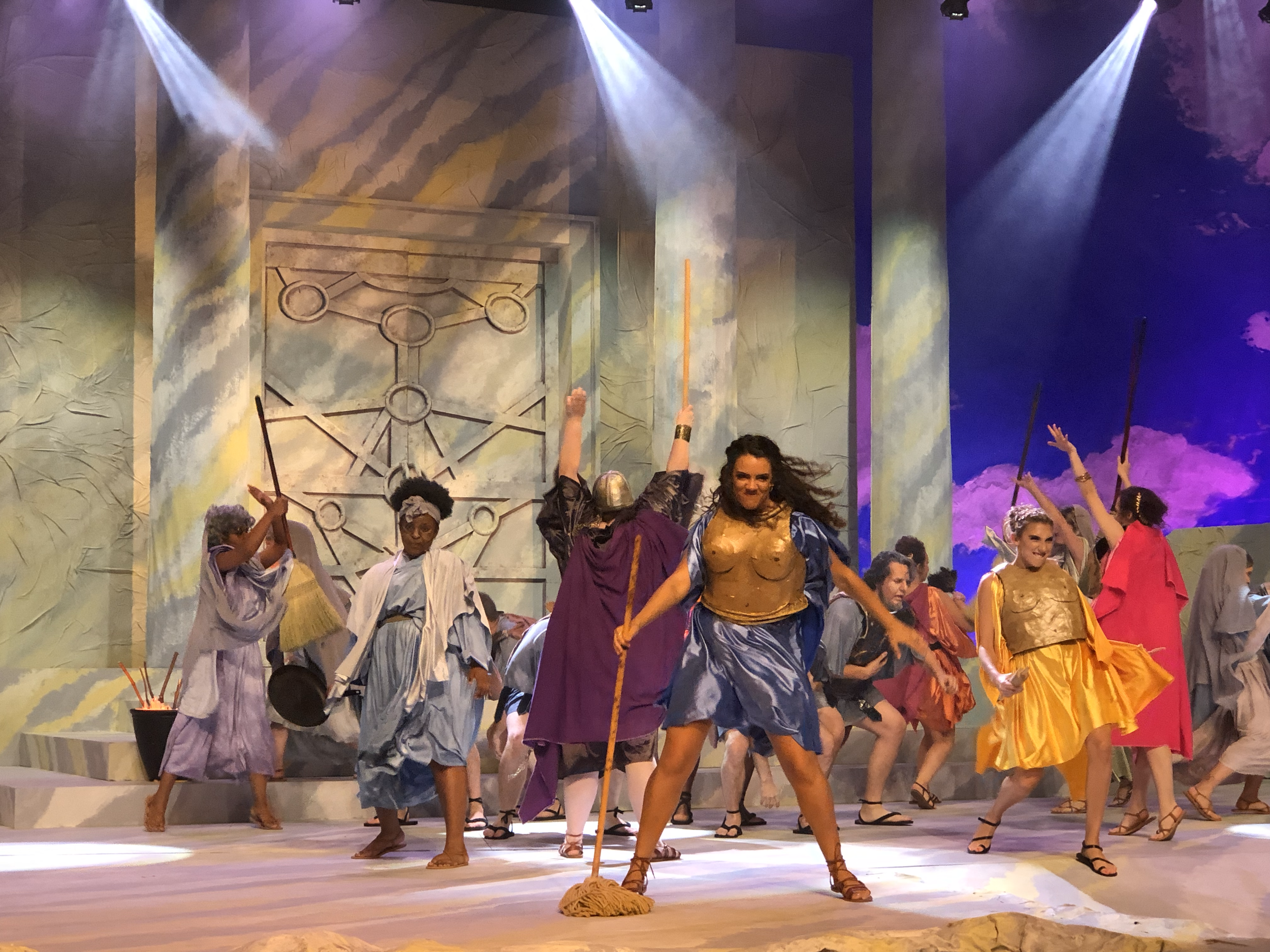
I combined elements of the Acropolis and Appia’s designs. The Director, Dr. Deena Conley, also wanted to utilize the whole theatre and be able to move through the audience. She especially wanted to make the audience uncomfortable as the soldiers returned, weary from war with giant enraged phalluses created by costume designer Mark S. Reynolds.
As a statement to the social bondage and treatment of women, at the time, I designed the Acropolis gates, the central scenic element of the show, as bondage gear. Something no one would notice but gave the design detail a direct contextual reference and gave the actors a reference they could reflect on and use as motivation.
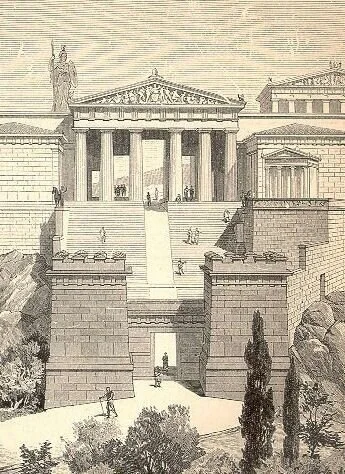
Research: Athens Acropolis. Lysistrata takes place in the Propylaea, the gates to the Acropolis.

stairway walking up through the current day Propylaea
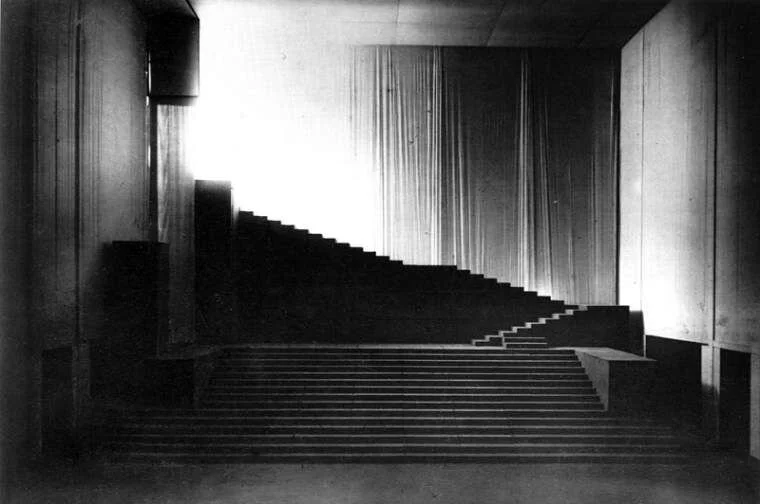
Adolph Appia's grand Set Design
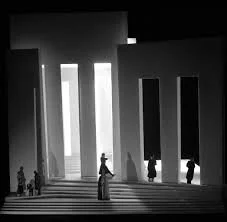
Adolph Appia's grand Set Design, using columns. I wanted to make a gesture back to the past and history of Scenic Design.
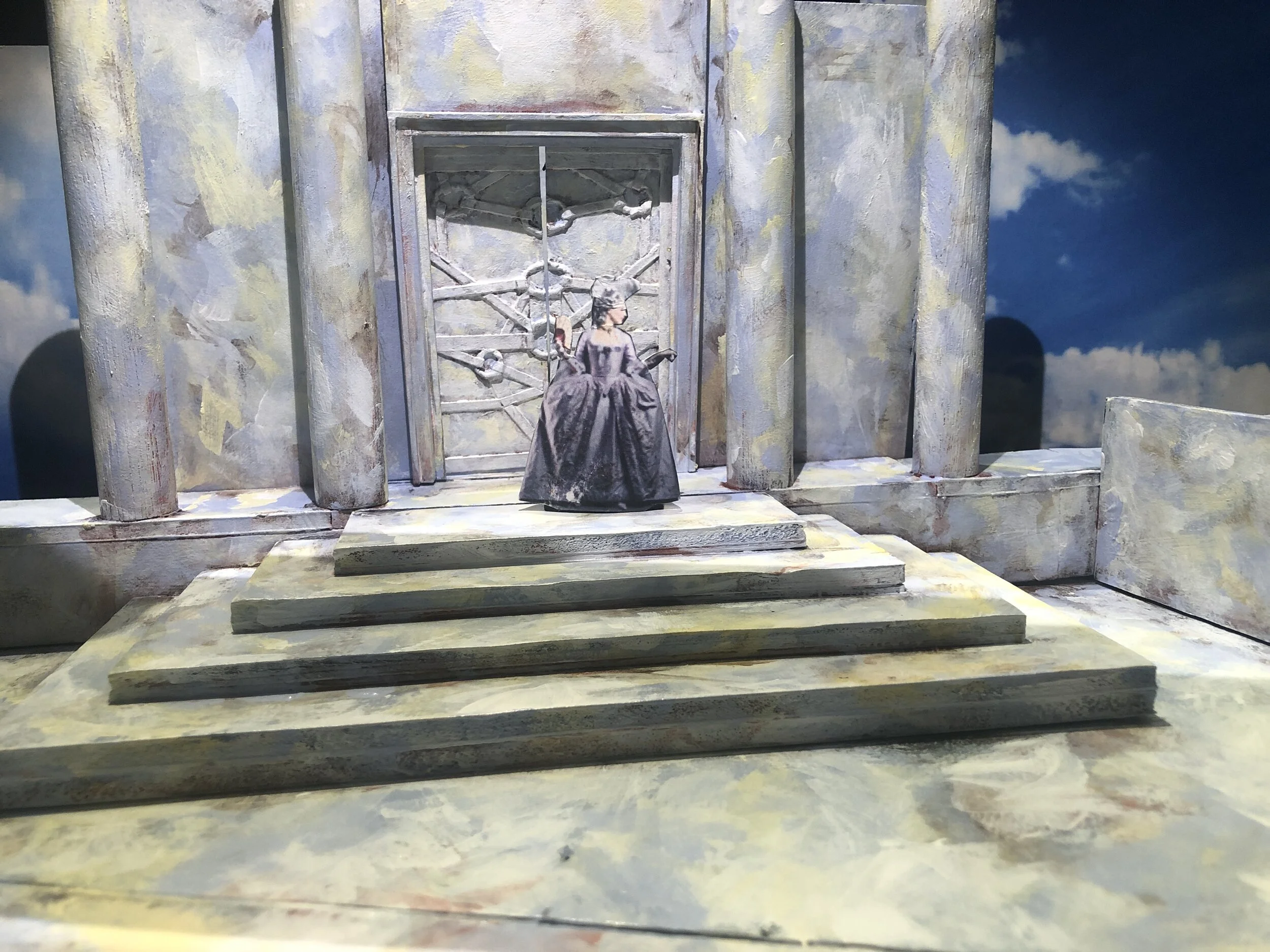
Model photo
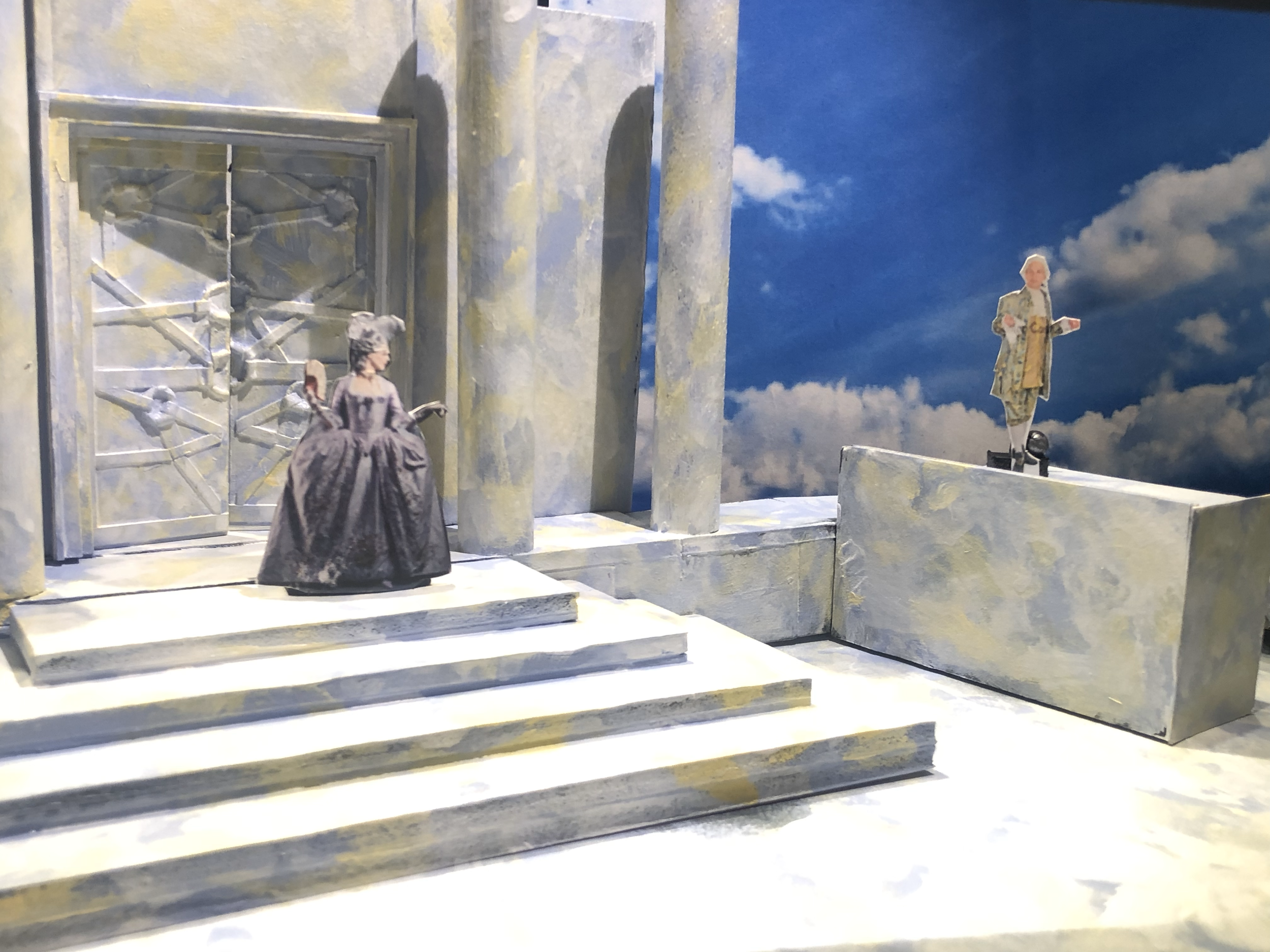
Model photo
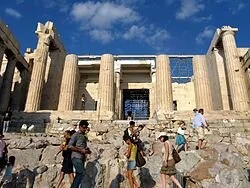
stairway walking up through the current day Propylaea and onto the Acropolis.
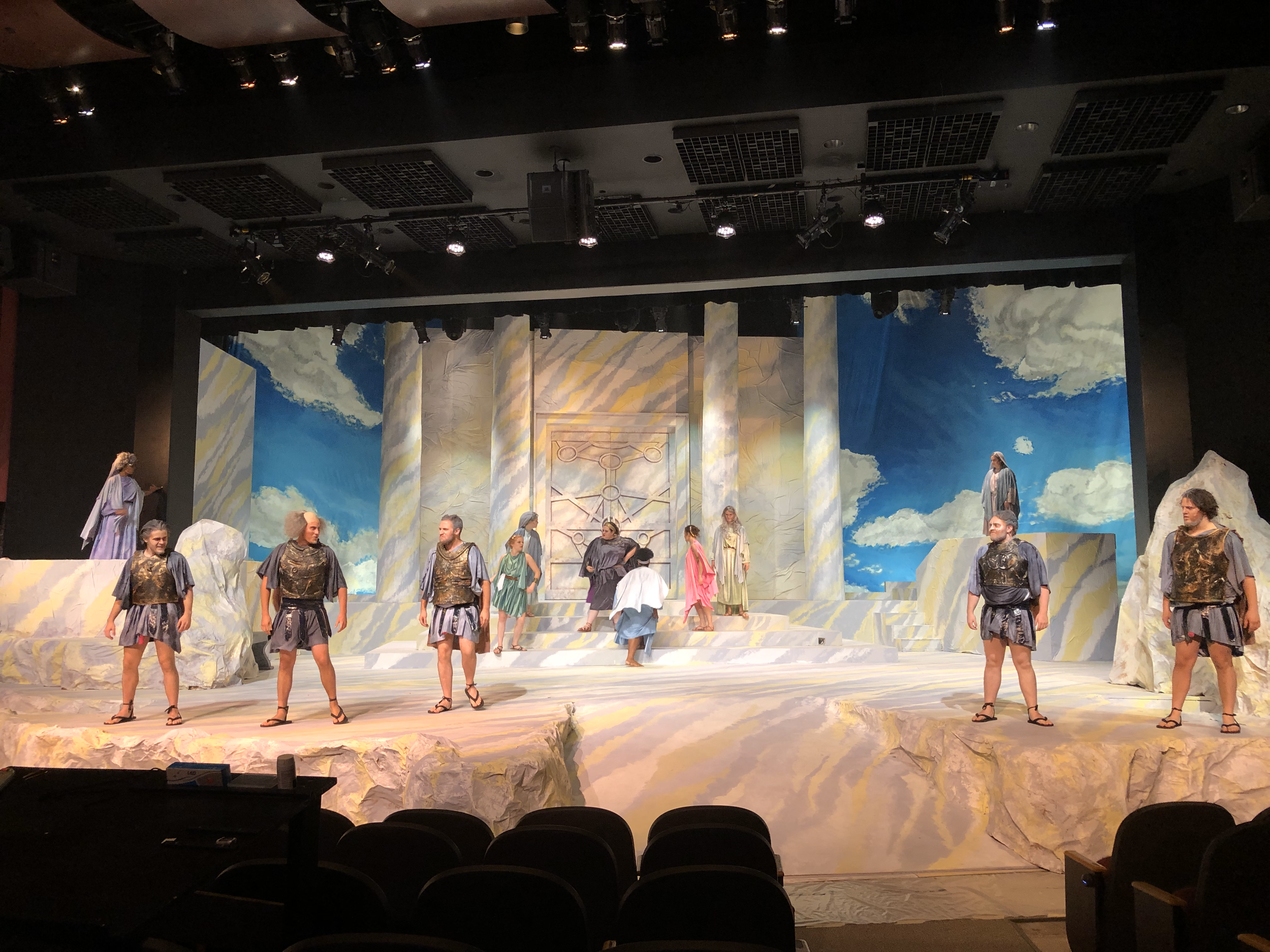
Prod. photo echoing the Grand scale and open sky of the Acropolis
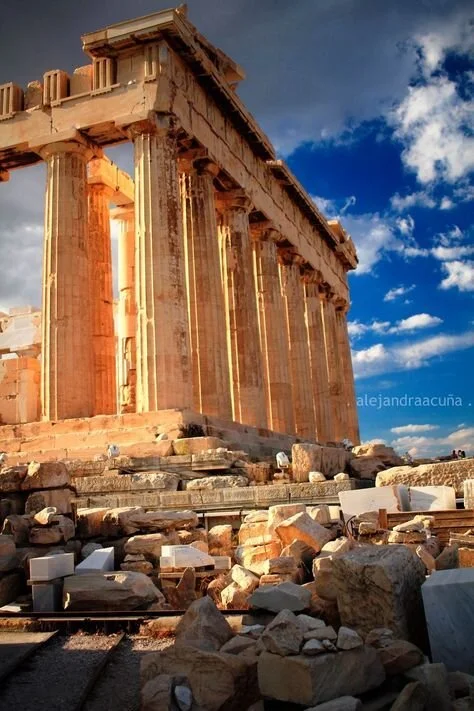
The simplicity of the grand columns against the blue sky
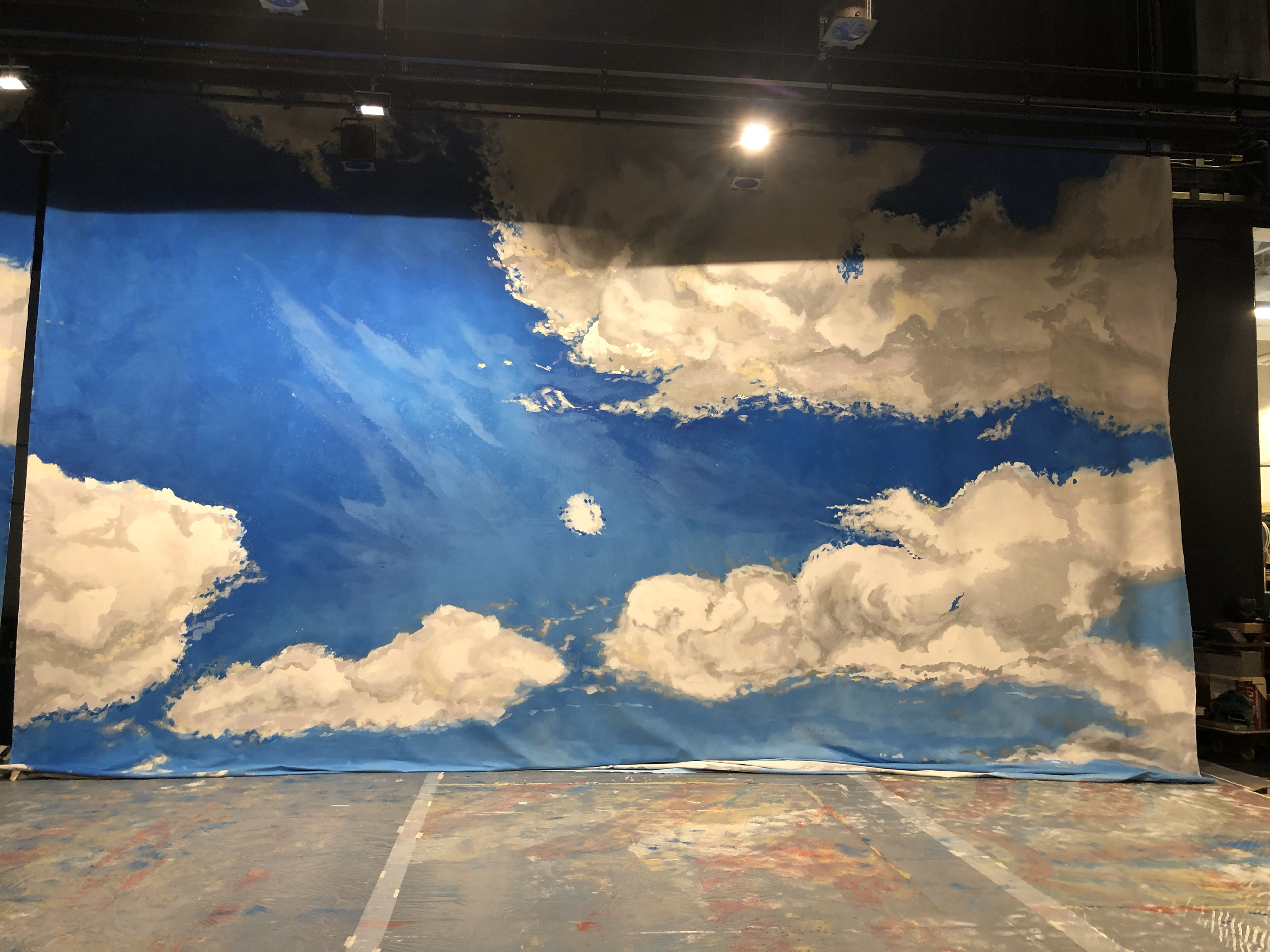
I painted 2, Blue sky painted drops 25'x16'
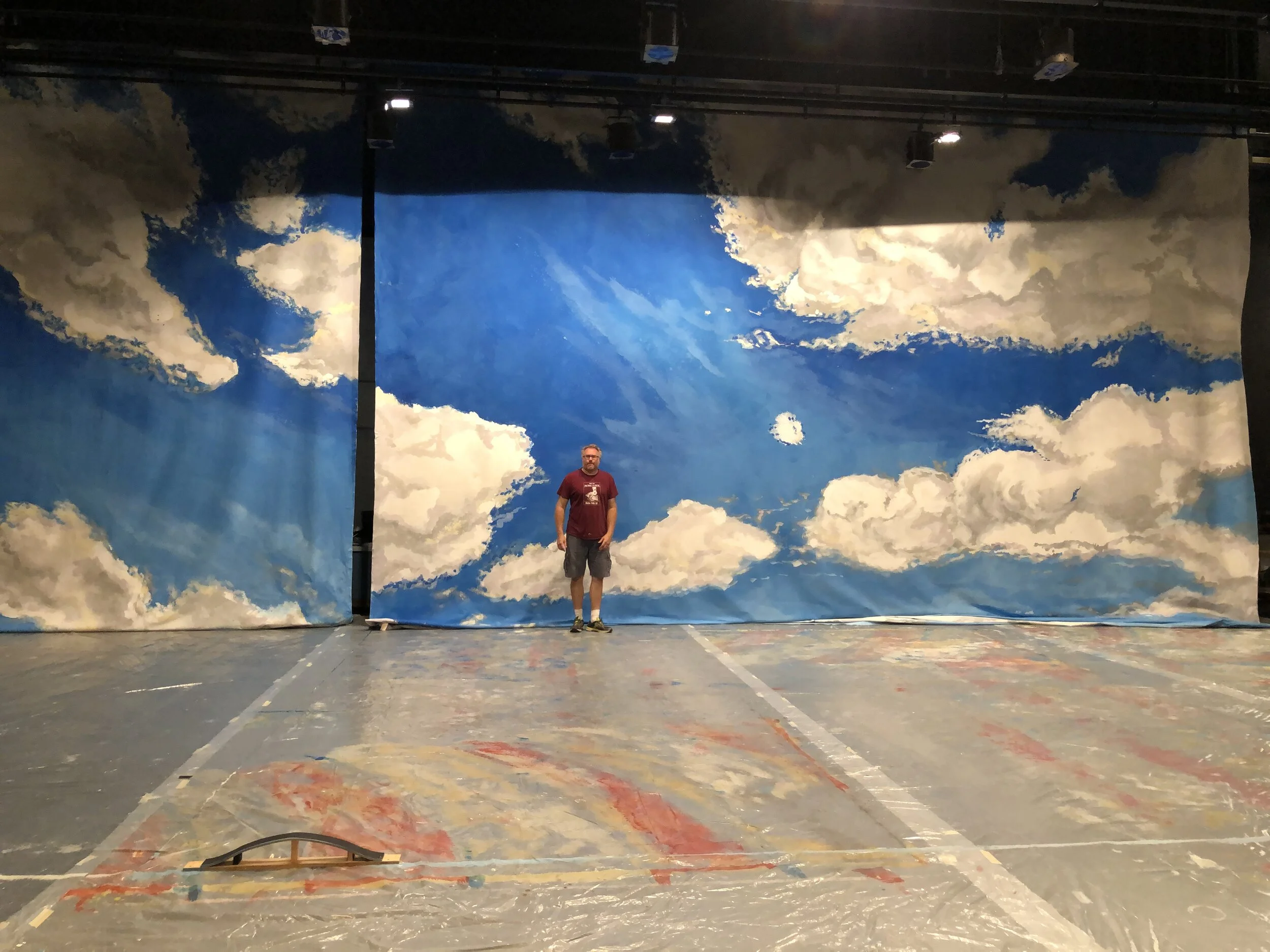
me standing next to the drops for scale
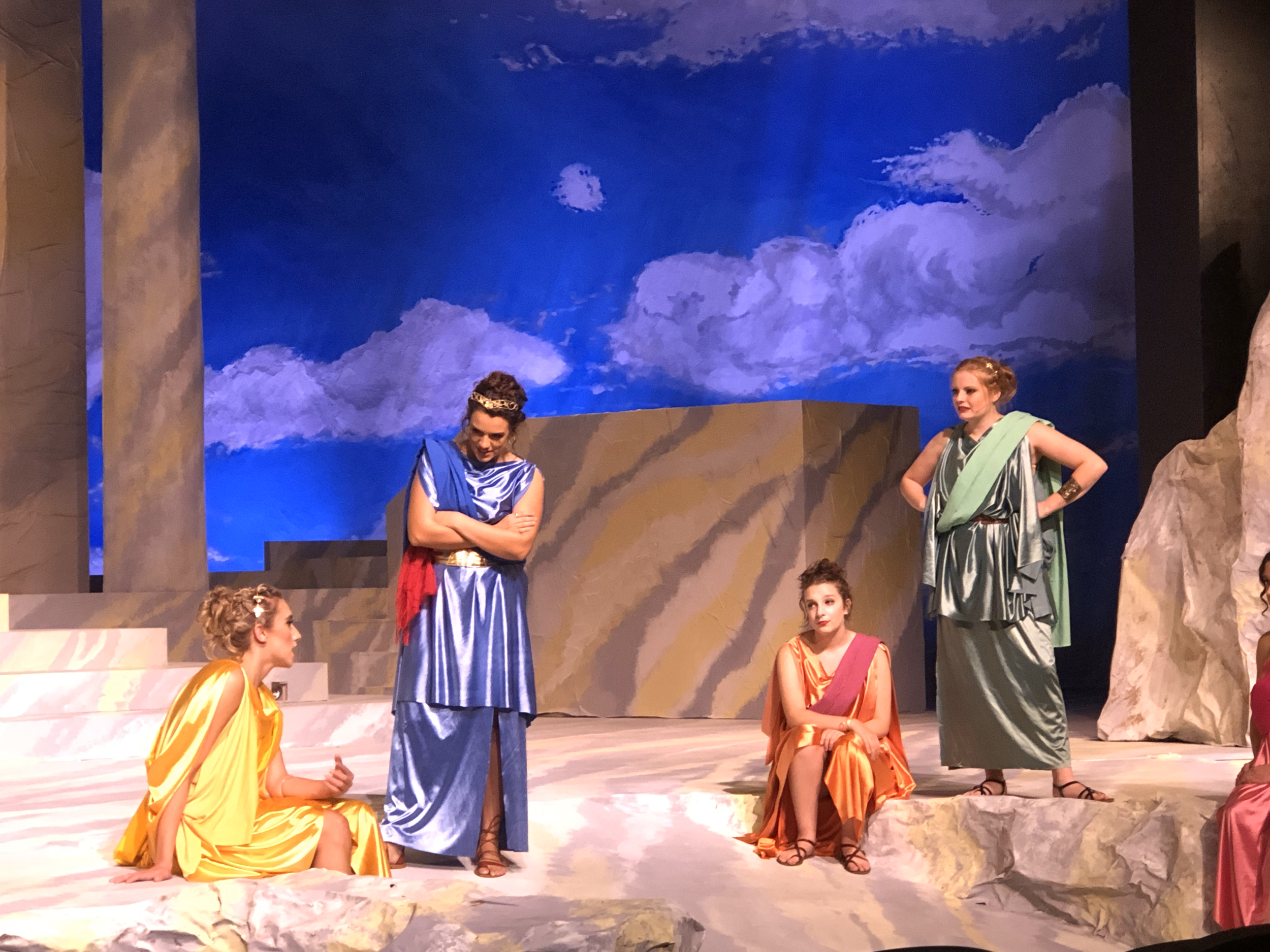
The blue sky drop beyond the set of the Acropolis
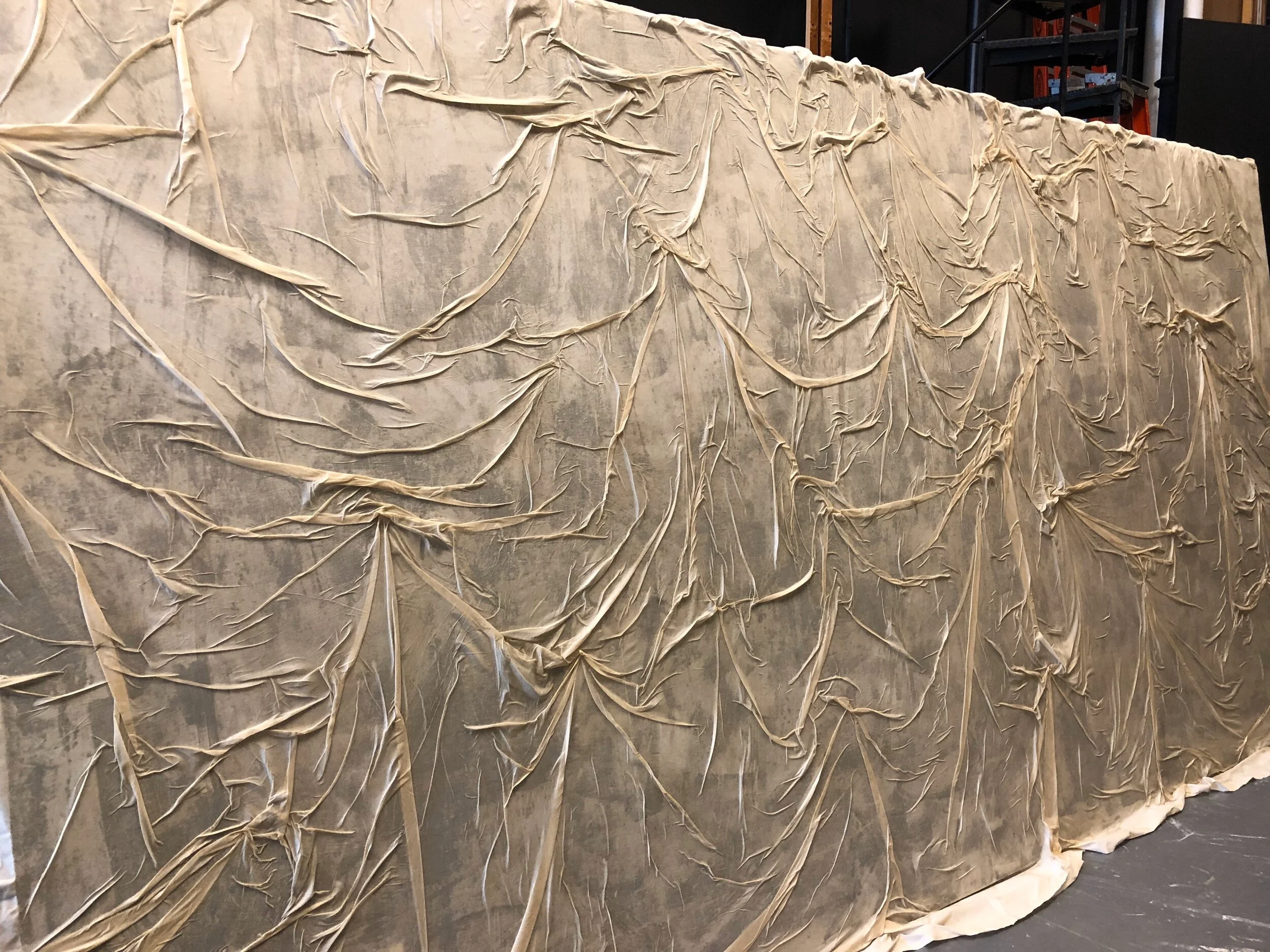
Textured wall. I wanted to add texture to the walls and surfaces. I experimented with wet muslin cloth and wrinkled it as I applied it.
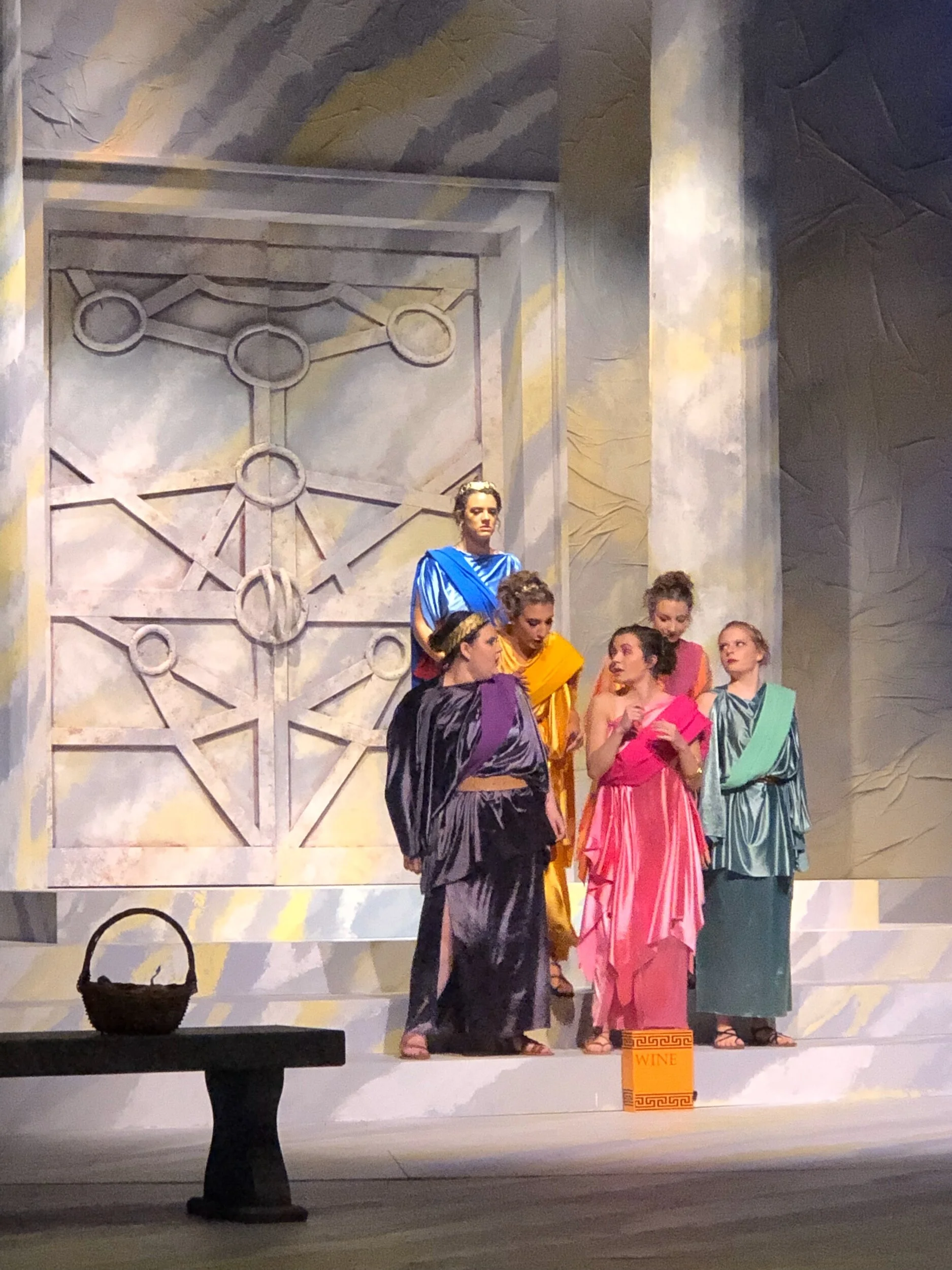
Bondage Doors. The pattern on the doors to the cities was inspired by bondage wear, referencing the women's restrictions and limitations in society.
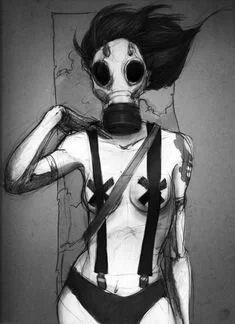
Inspirational art. I was researching women protestors and women in war zones and came across this art which led to an exploration in bondage wear.
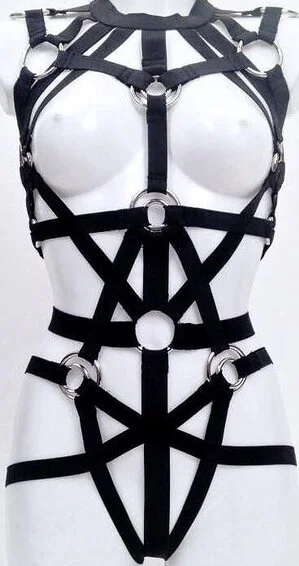
This is the piece that the doors were designed after.
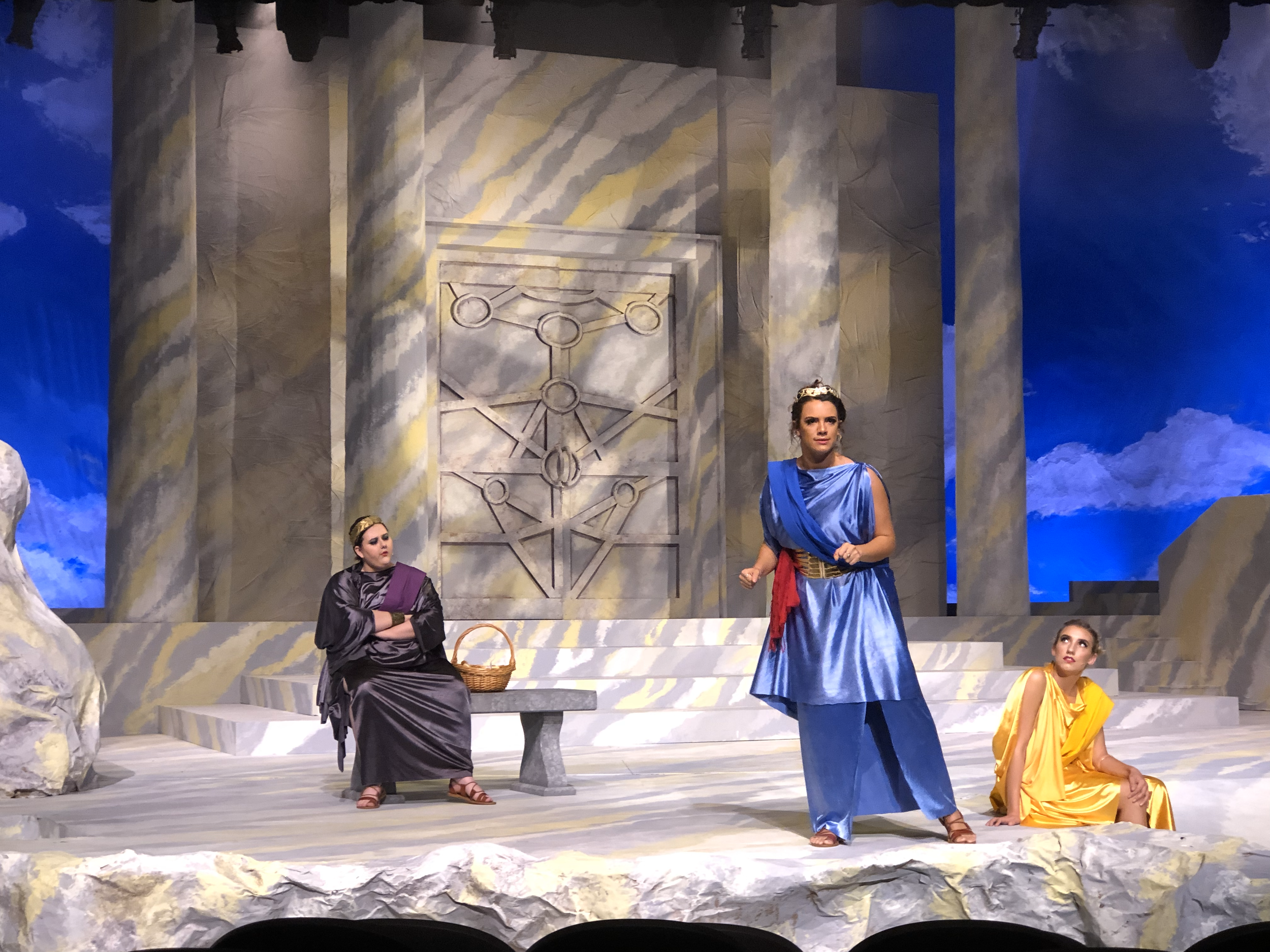
Prod. photo
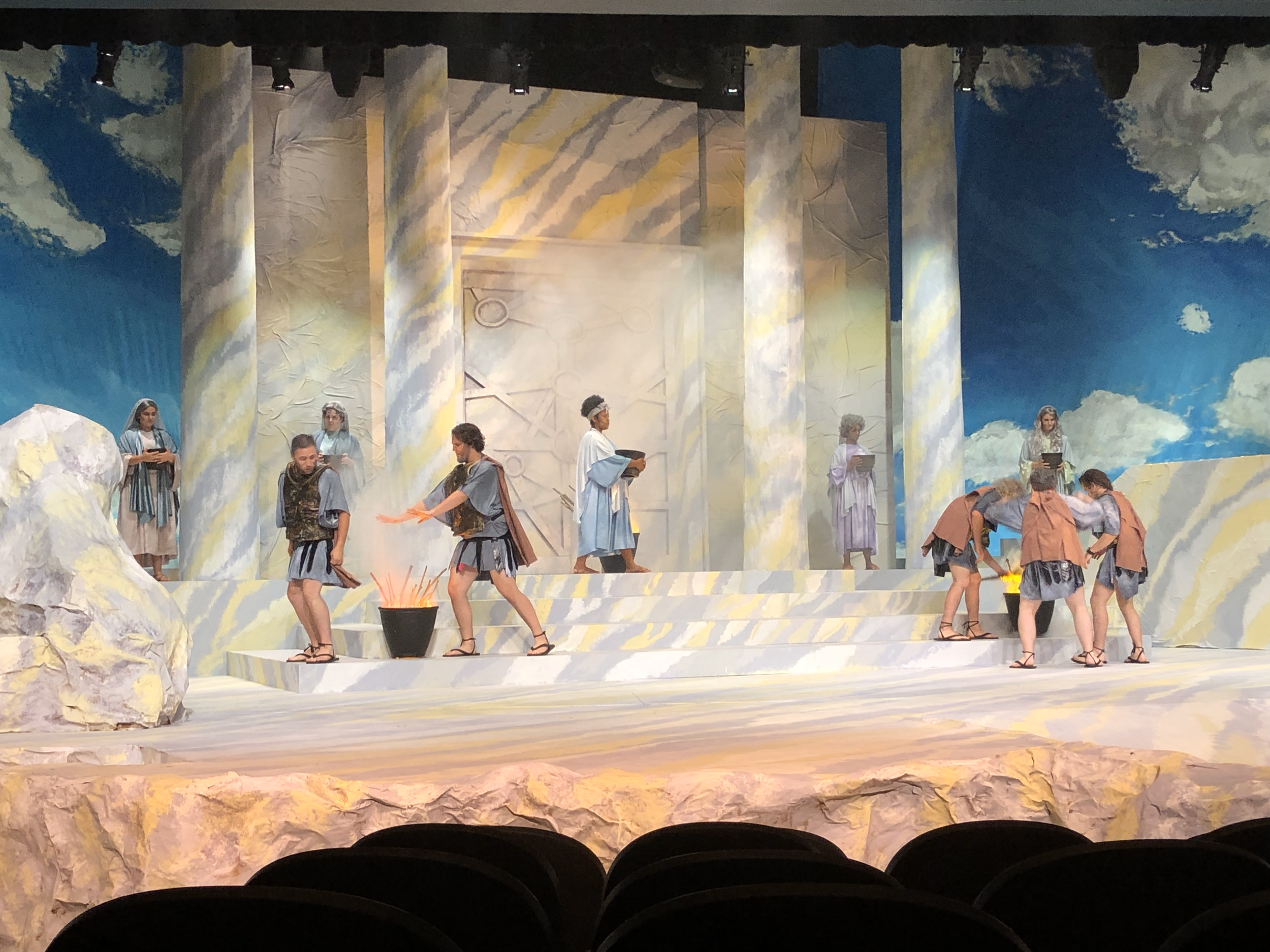
Prod. photo
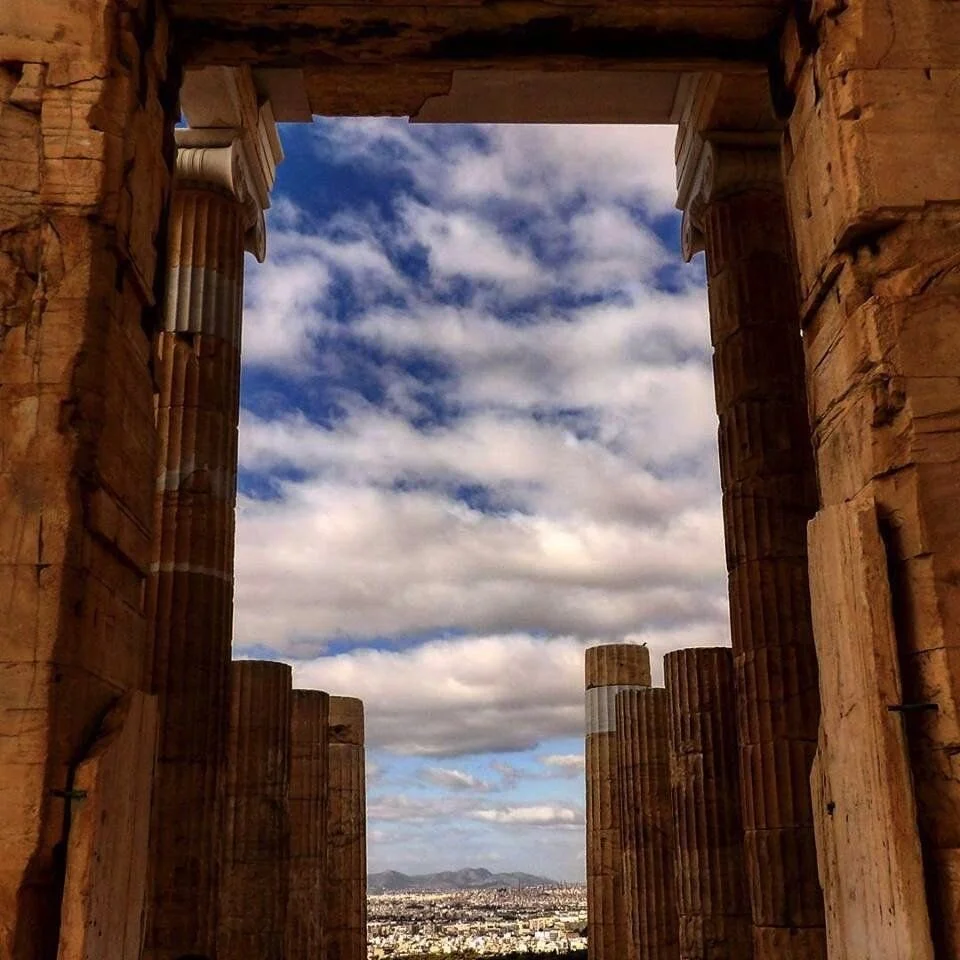
research photo. I loved how this grand architecture played against the open sky.
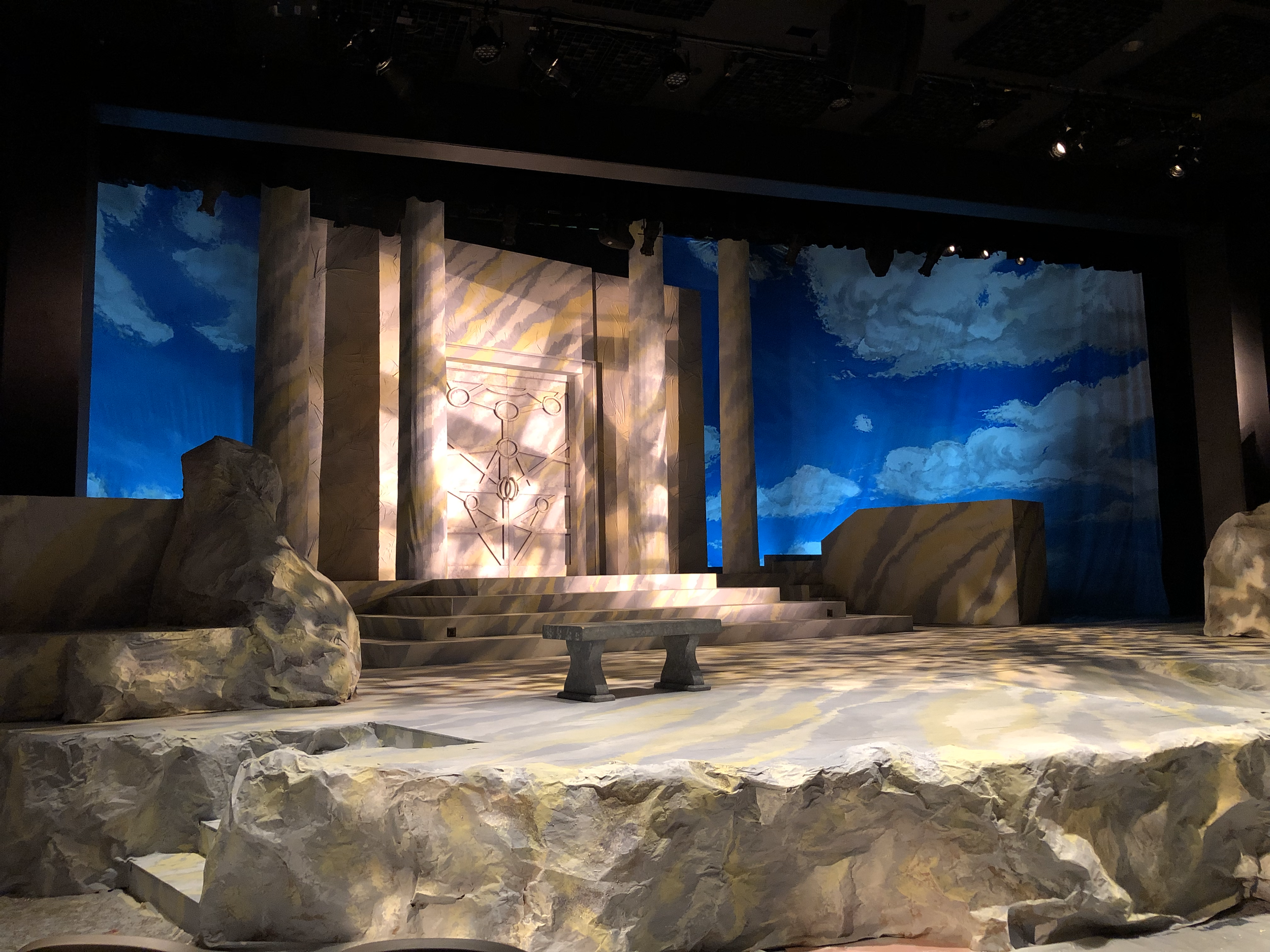
This photo captured the grand doors of the architecture amongst an open sky. This also shows the paper mache' rocks that were built around the stage.