Cabaret
Set inside an industrial scale meat packing facility, this world became the greater metaphor for the Kit Kat Klub in Berlin Germany 1929
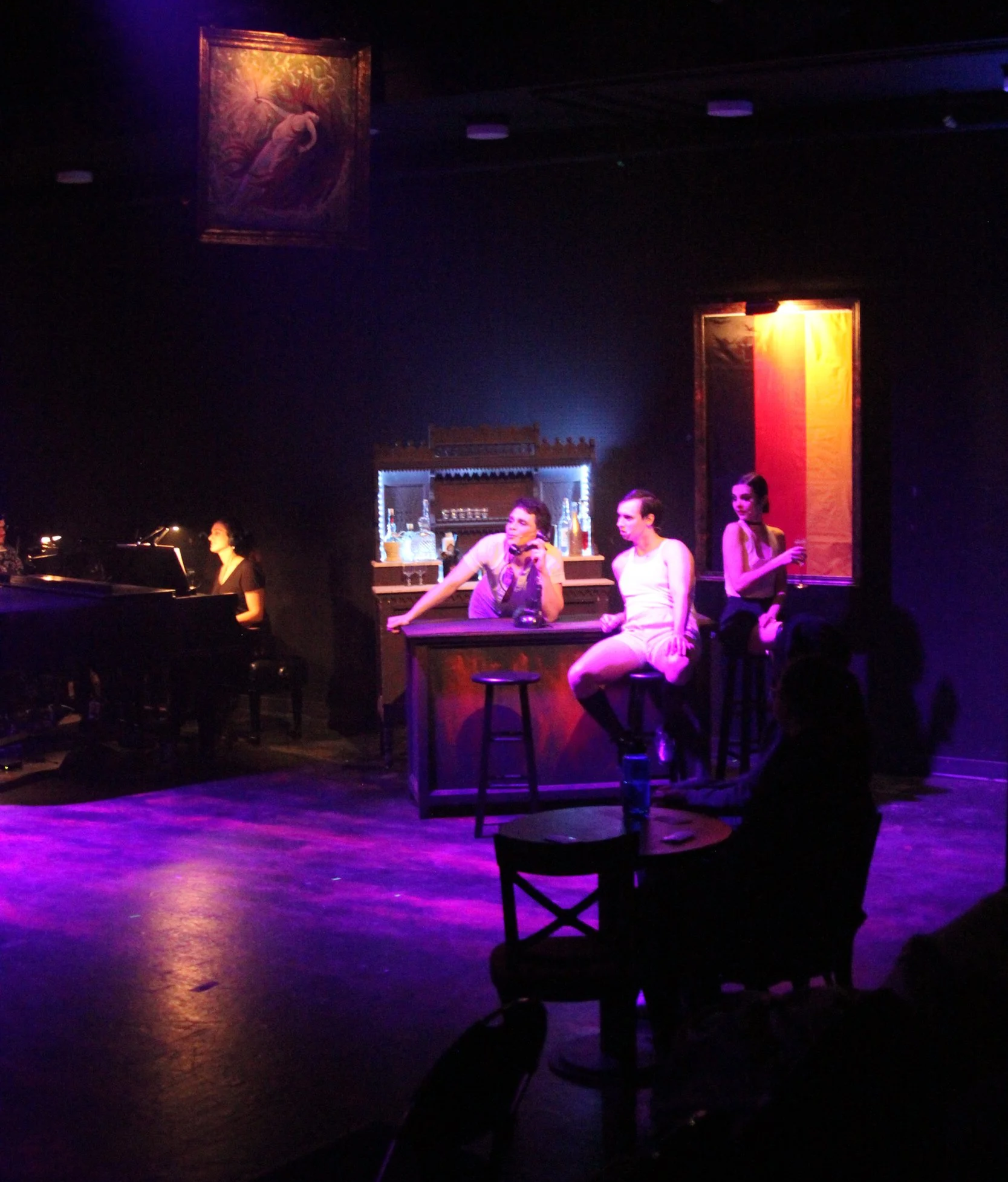
The Bar in Cabaret is where everything is for sale, sex, drugs, even one’s soul.
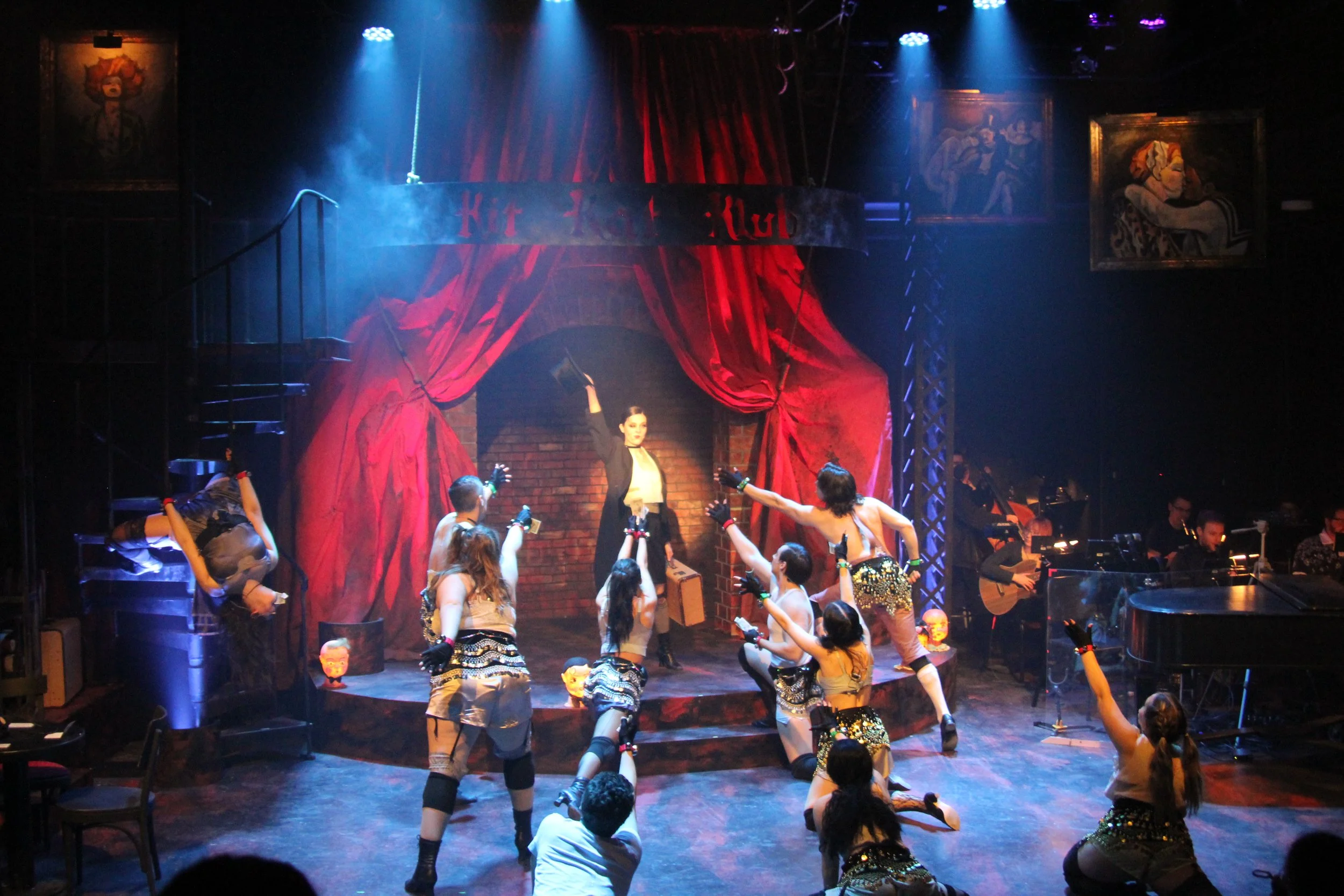
The Bar and club were one space. Dancers can easily engage with audience amongst the 4 tables placed inside the action.
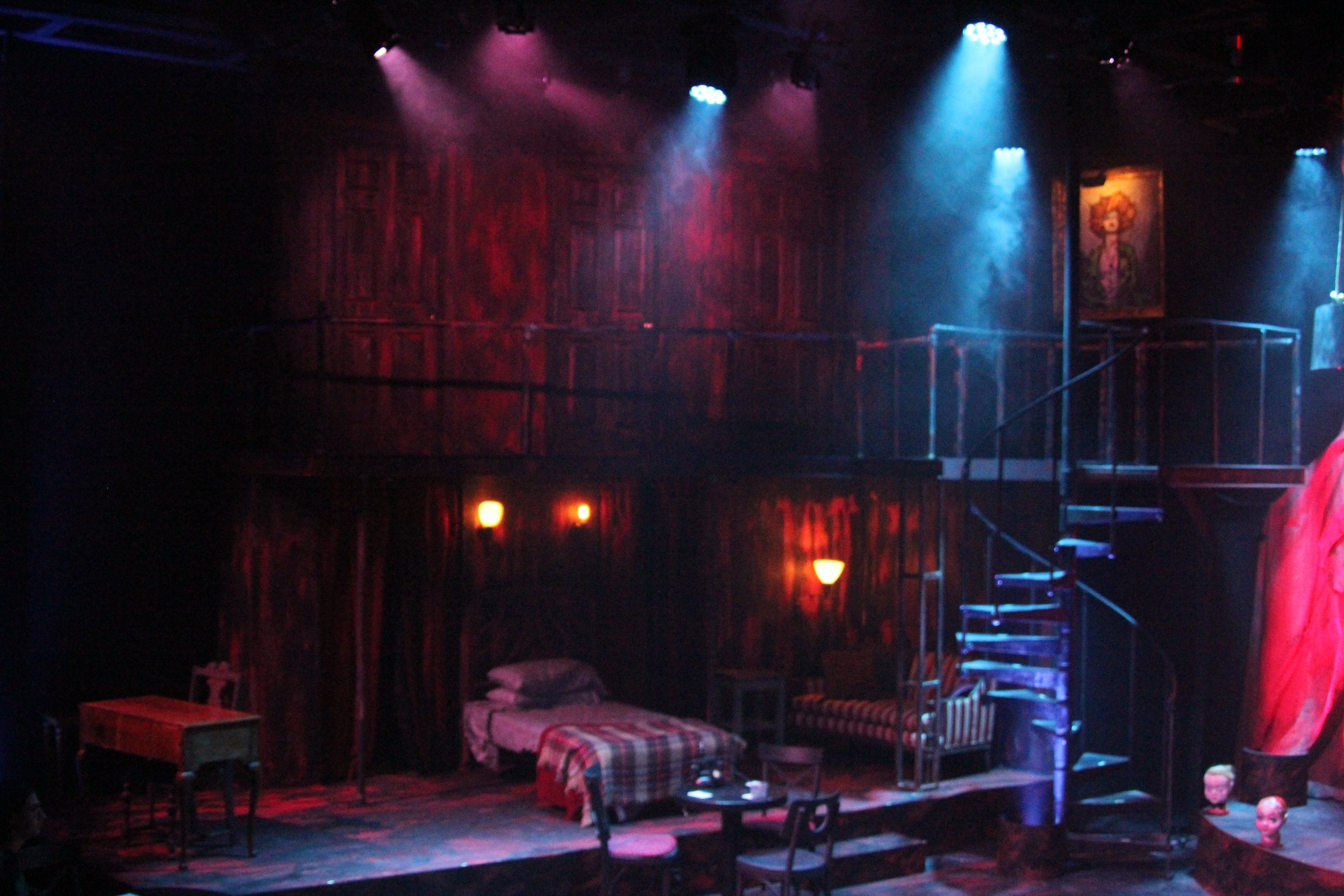
The Apartments dissolved into and out of the club allowing for fluid action between scenes and locations with in the script
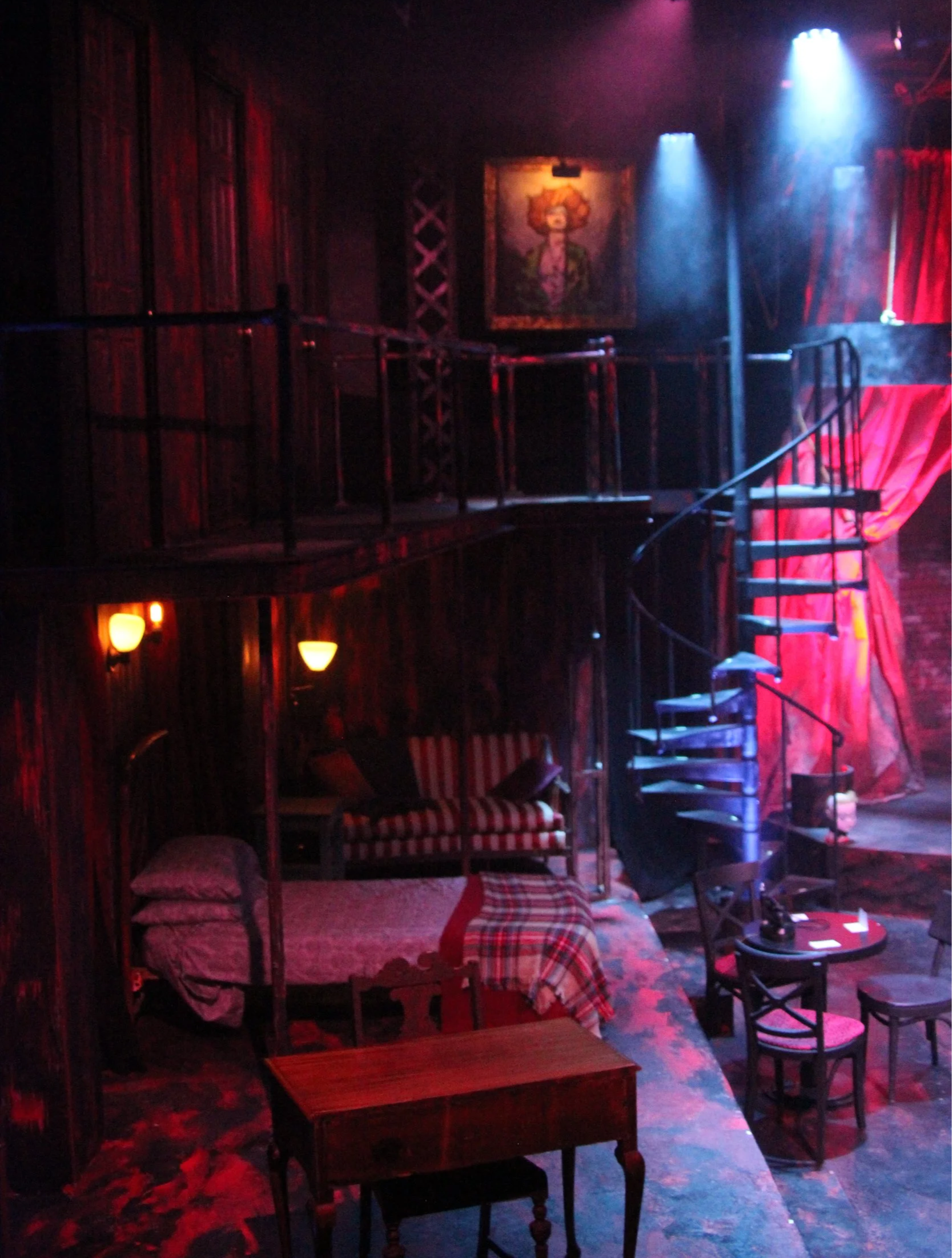
The Apartments dissolved into and out of the club allowing for fluid action between scenes and locations with in the script
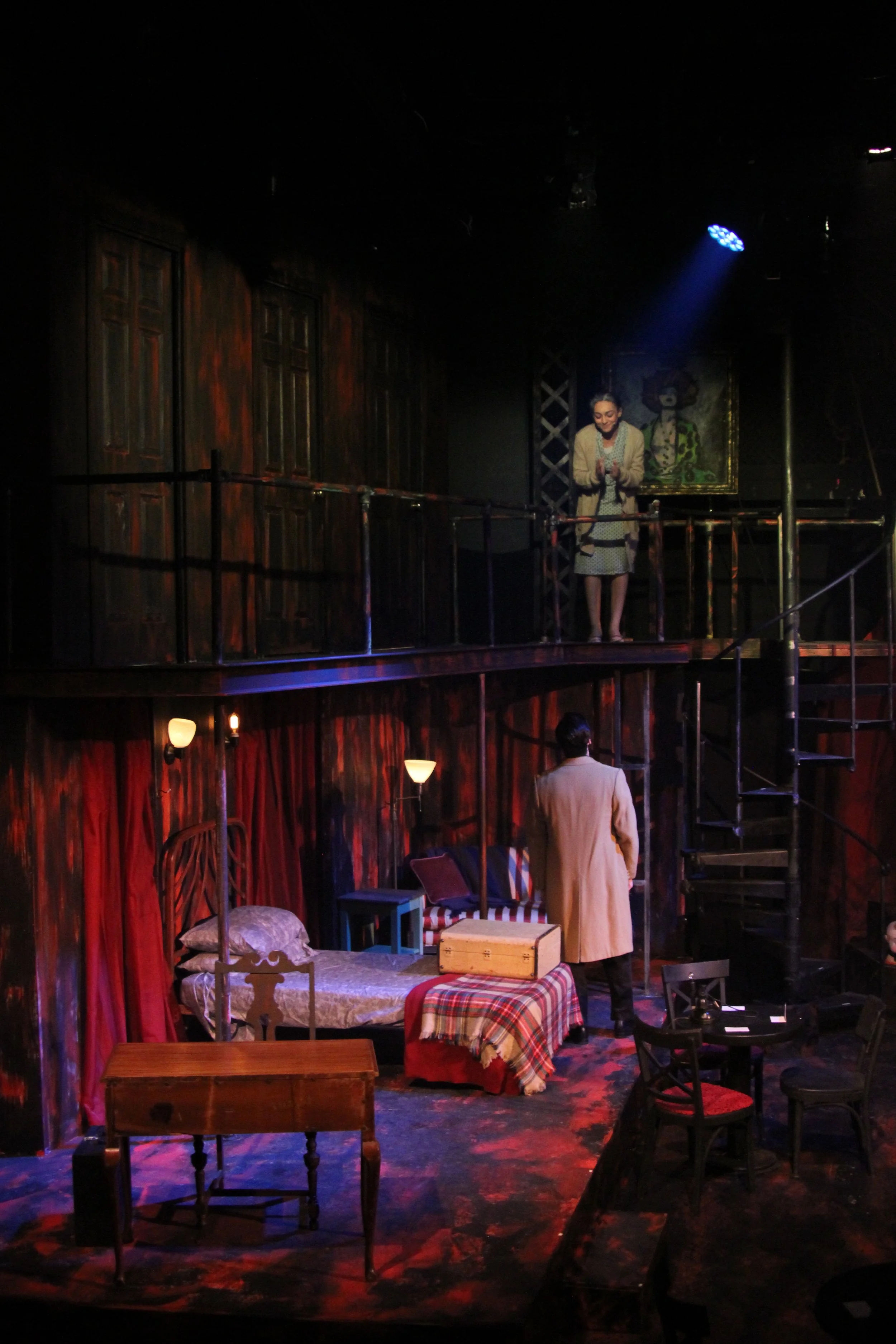
The Apartments - above and below. The apartment doors above opened into a wall on the narrower down stage end
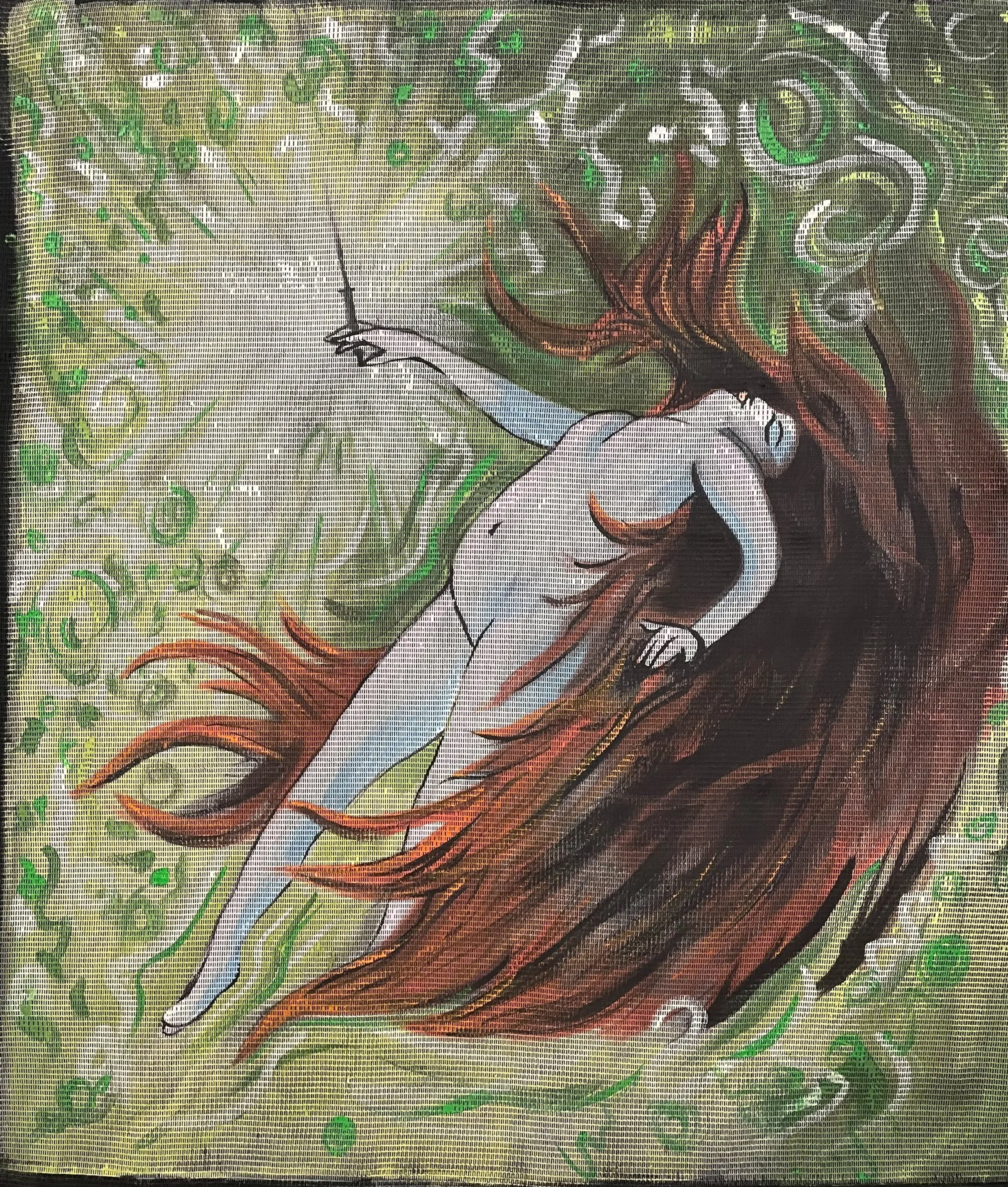
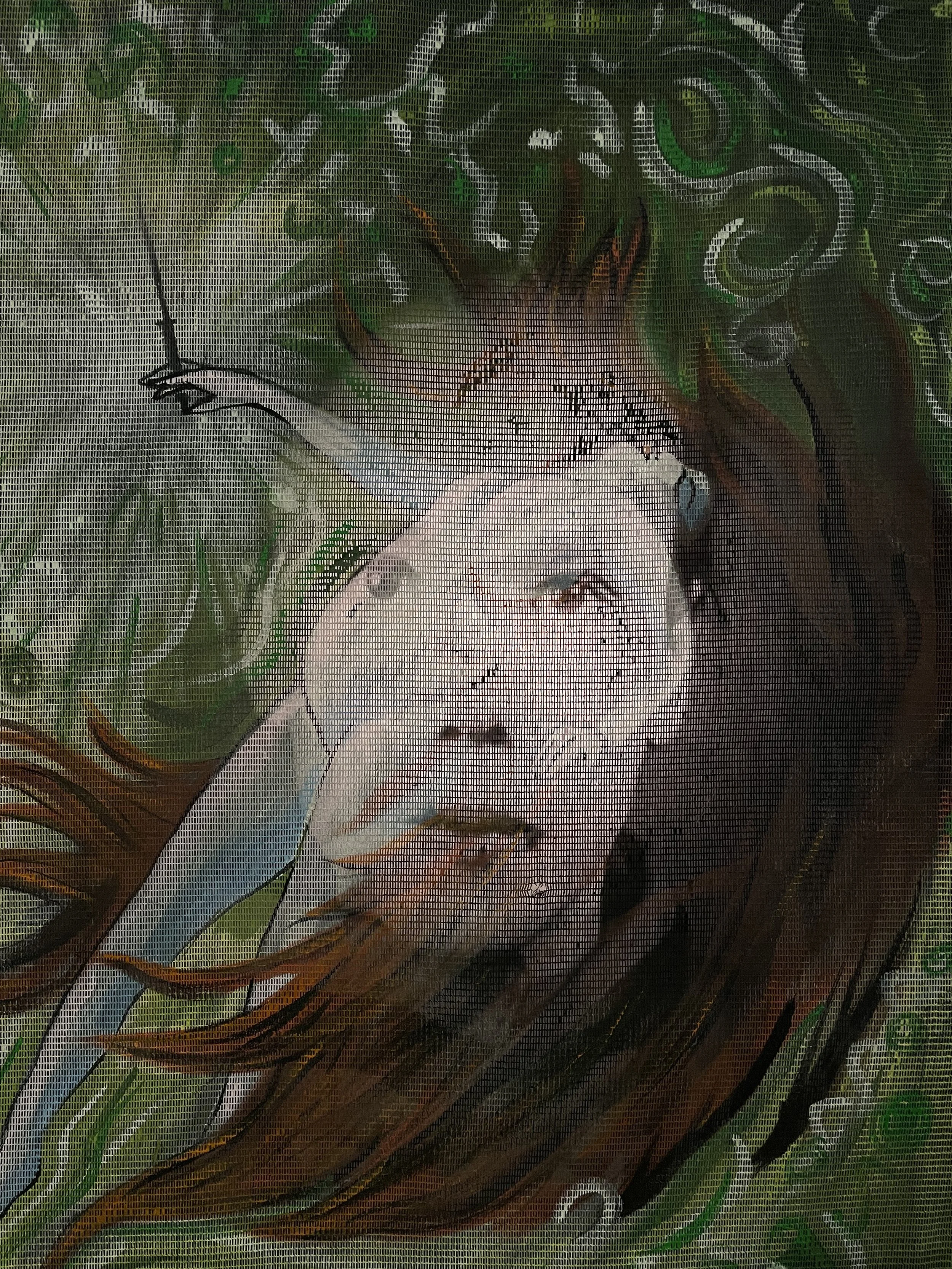
It was important to the Director for the club to transform at the end and that we acknowledge the children who died in the holocaust. To achieve this I painted images of decadence, absinthe use and home erotic imagery on top of scrim. Scrim is a theatrical netting that takes paint well. When lit from the front you only see the painted image. When out from behind another image is revealed. Left is a painted reproduction of a postcard about absinthe use. On the right is a young man’s photo taken before going to the gas chamber. The club that was surrounded with art became a club surrounded by black and white portraits of Jewish young adults.
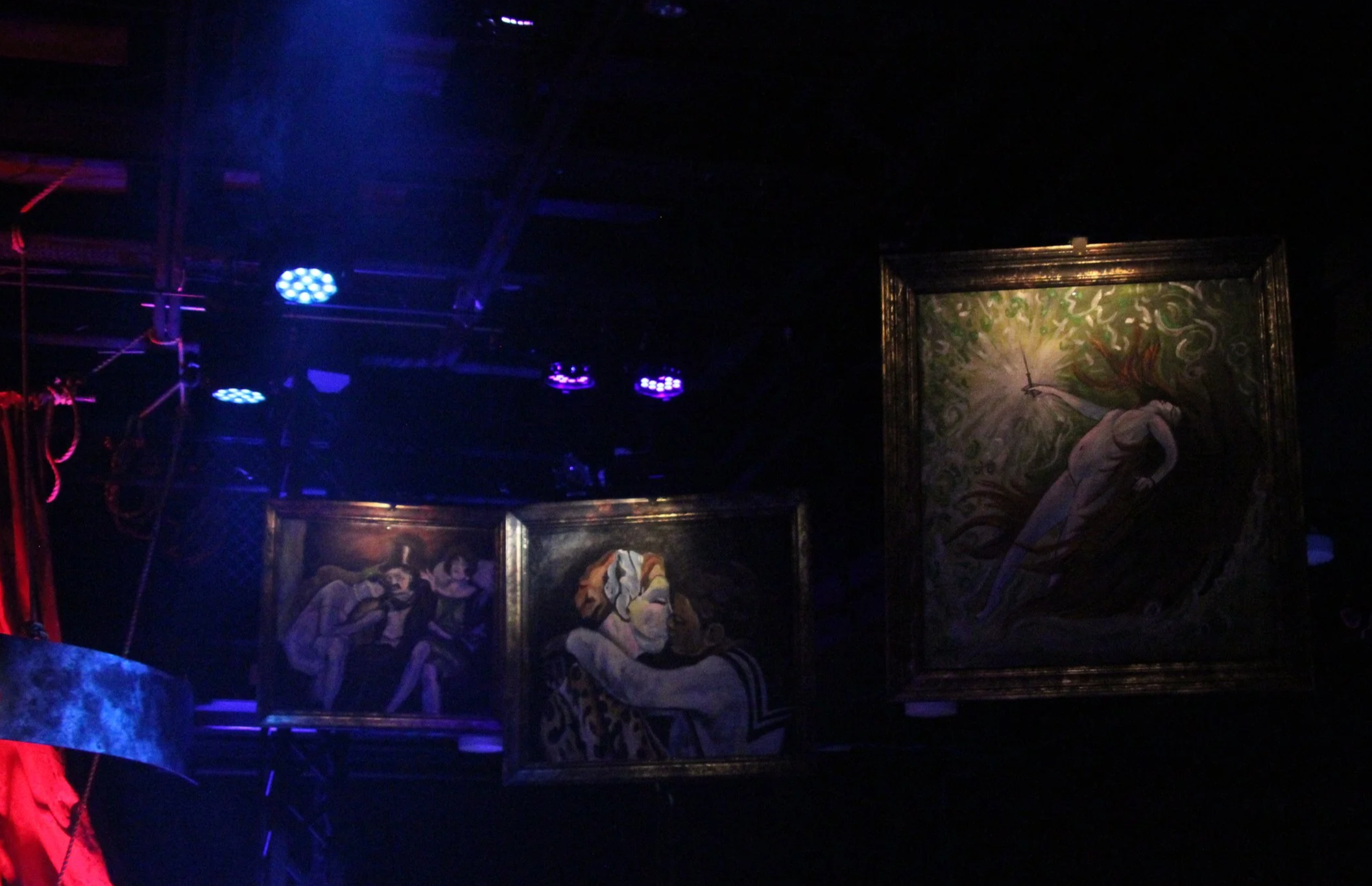
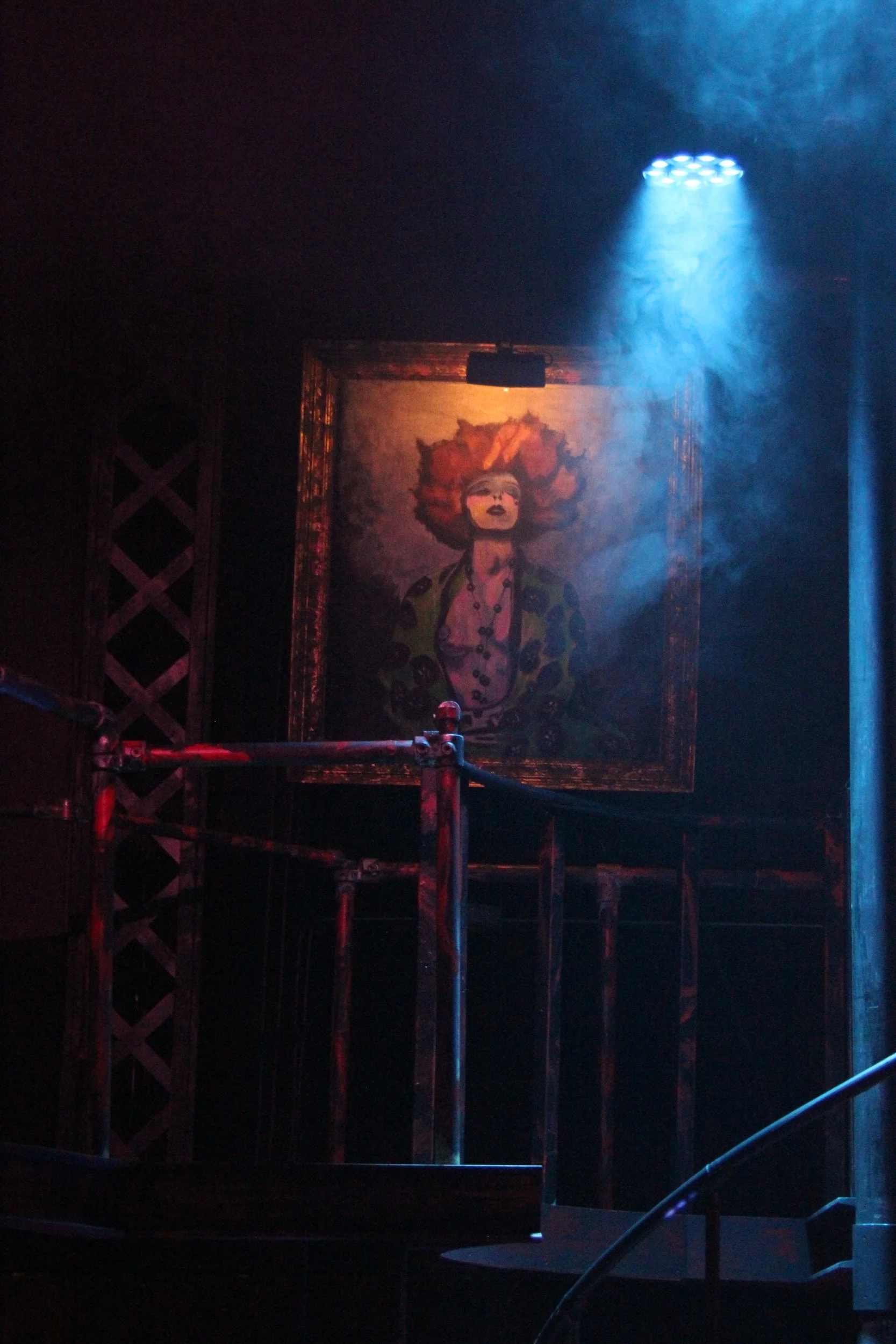
The clubs images were reflections of the decadence, drug and absinthe use, homo erotic imagery and portraits of bourgeoisie patrons.
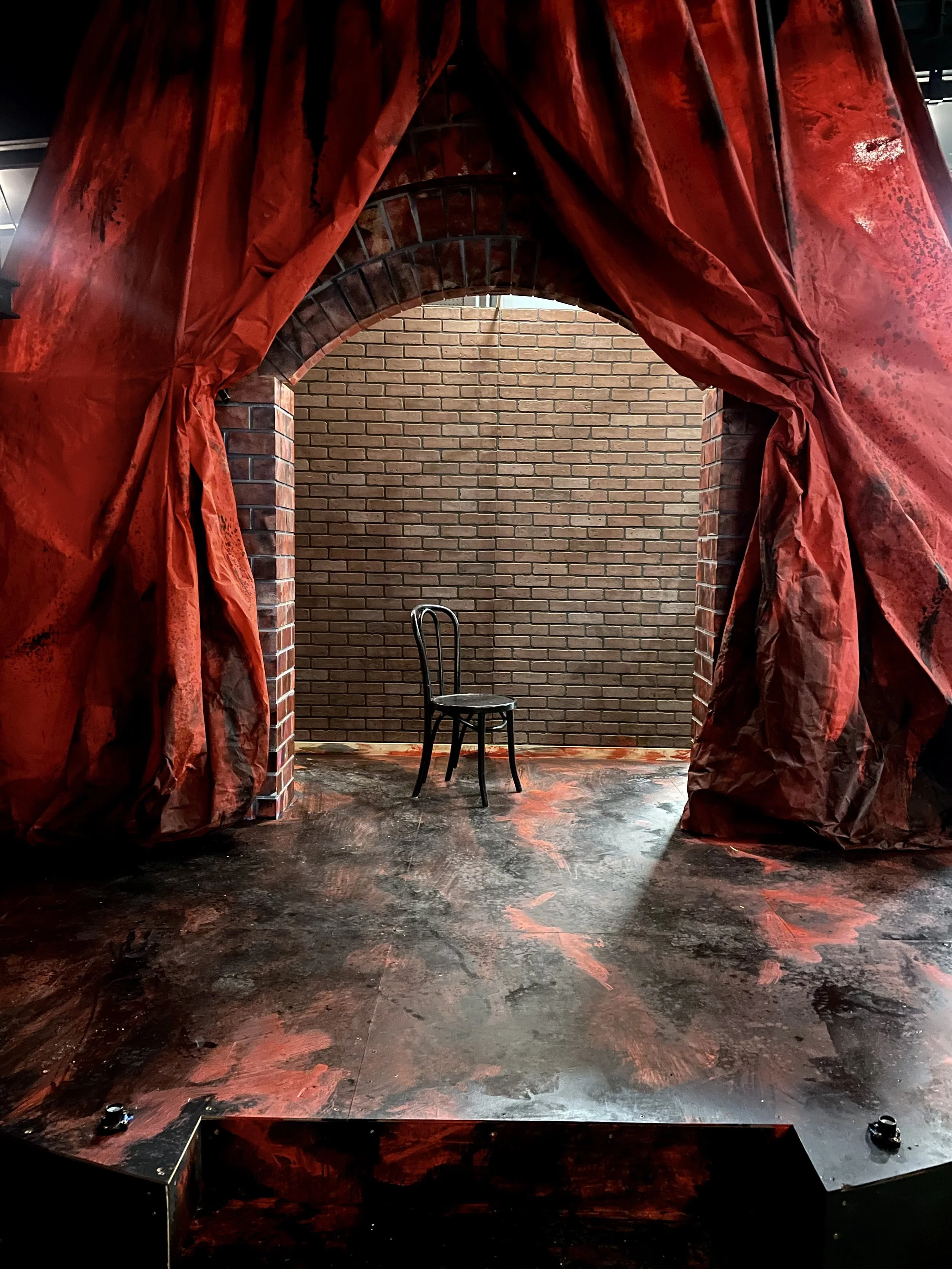
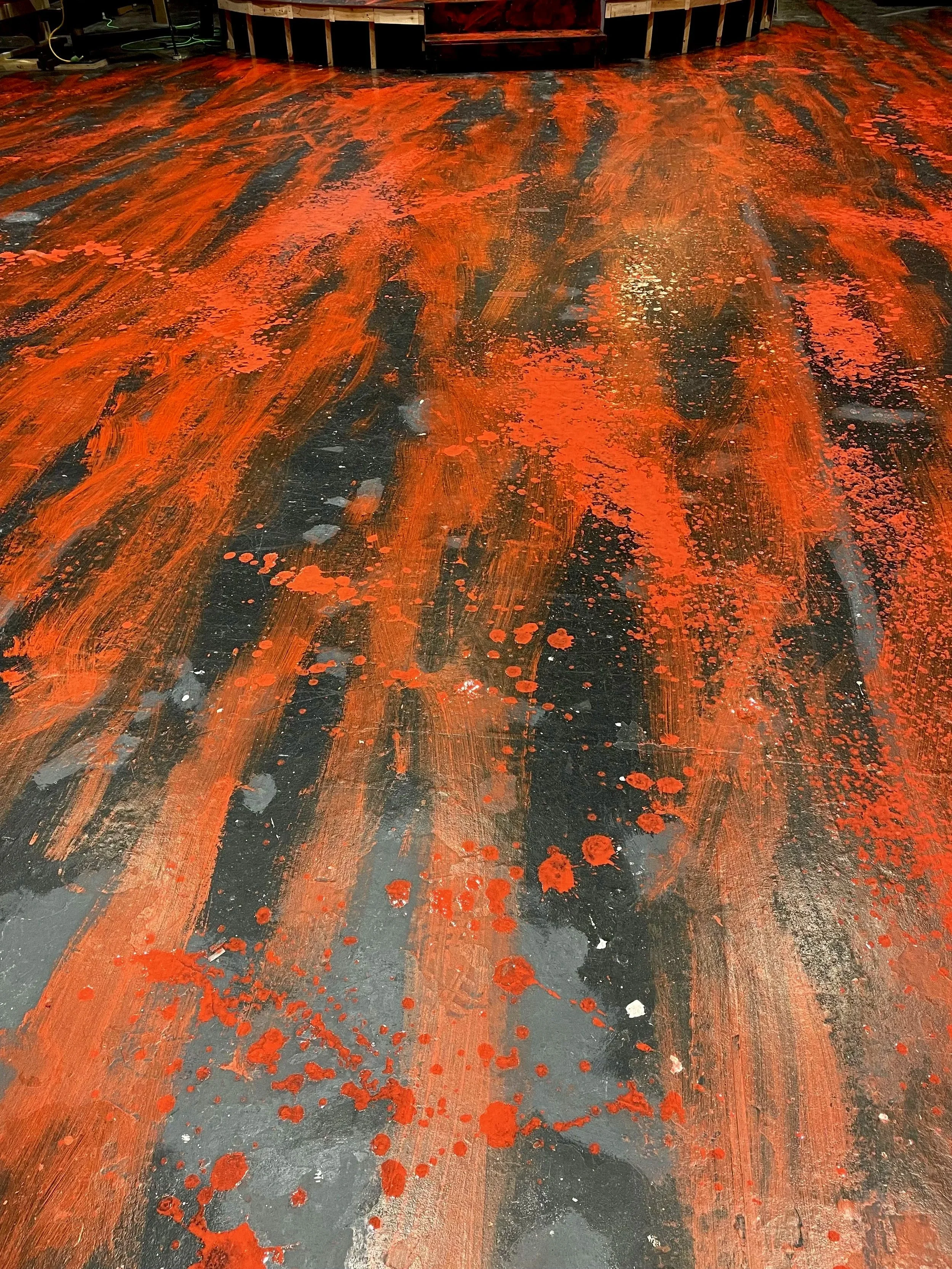
With the theme of the slaughterhouse I painted the floor with mop of bright Red paint in a violent and expressive gesture
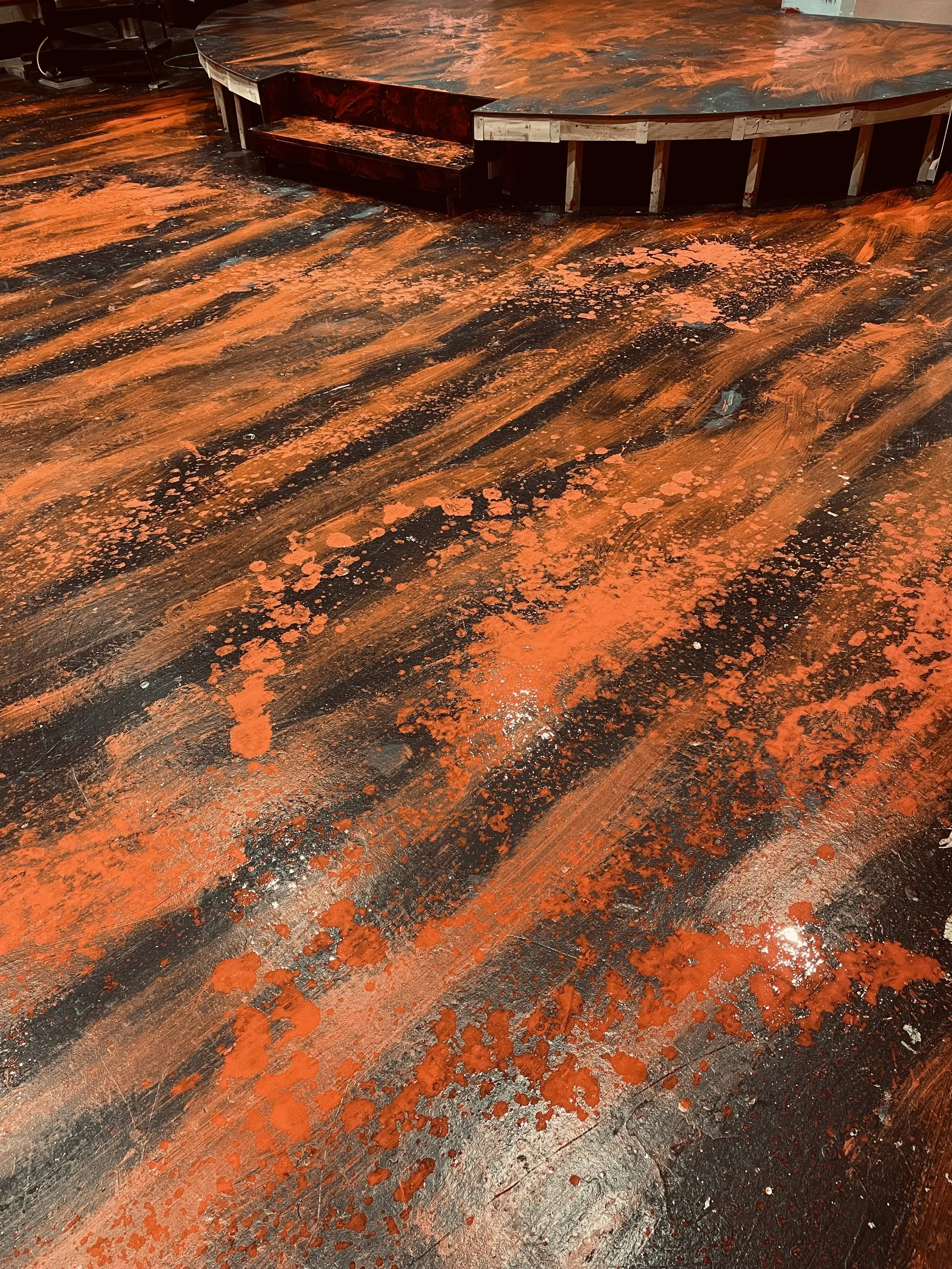
Expressive painting of red over black
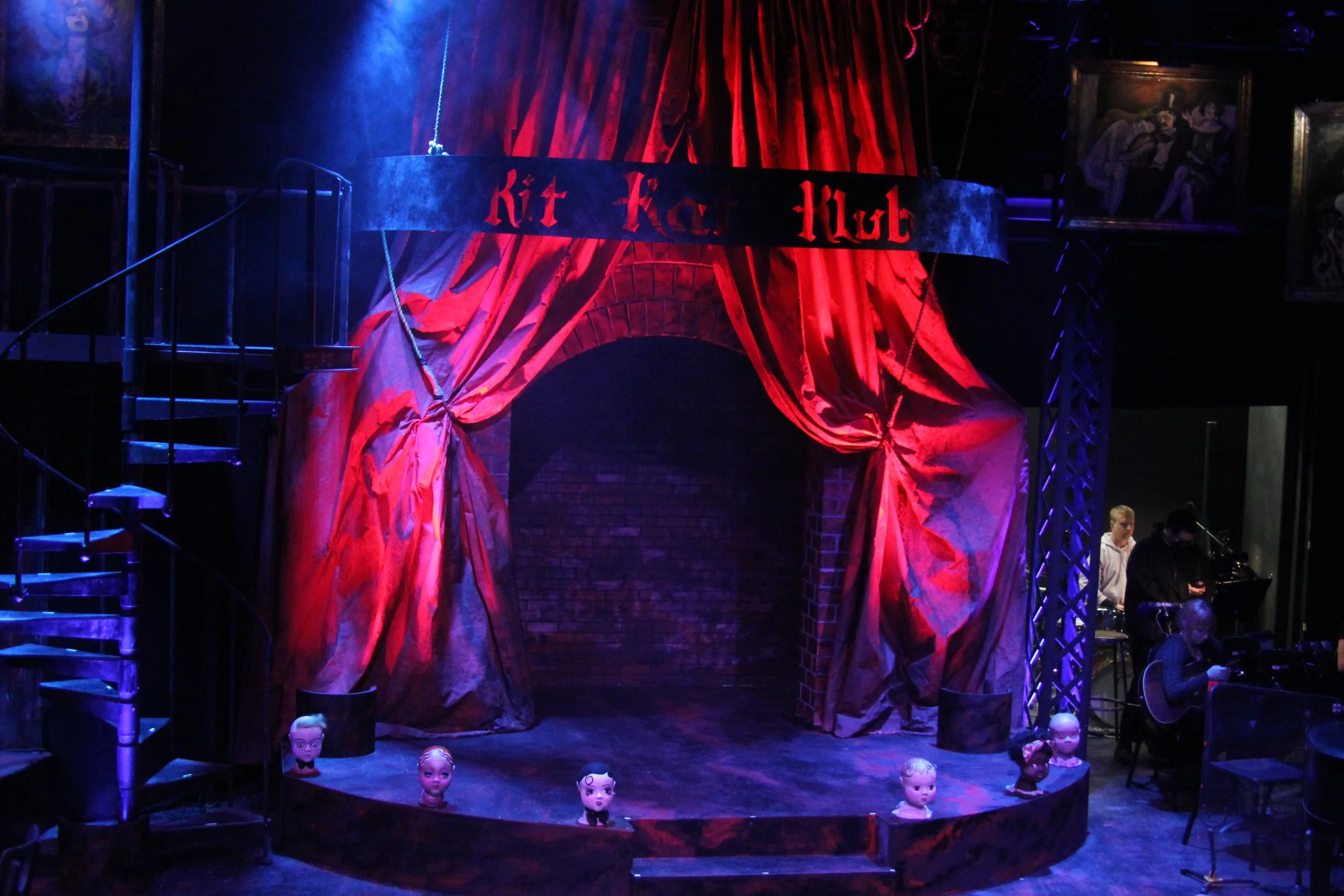
The drapery was painted red with black bleeding up into the bottom as a curtain might become dingy and stained in a wherehouse
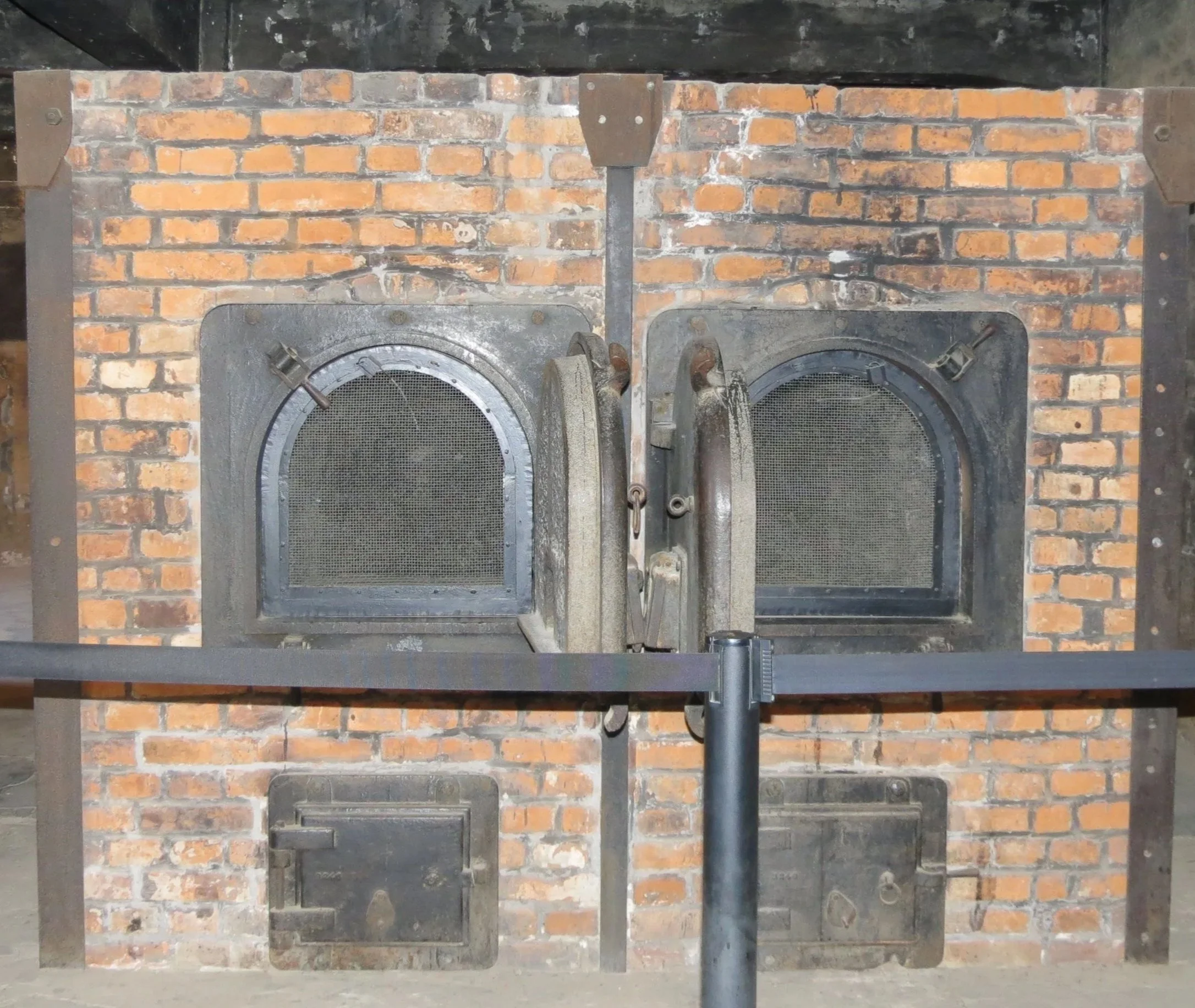
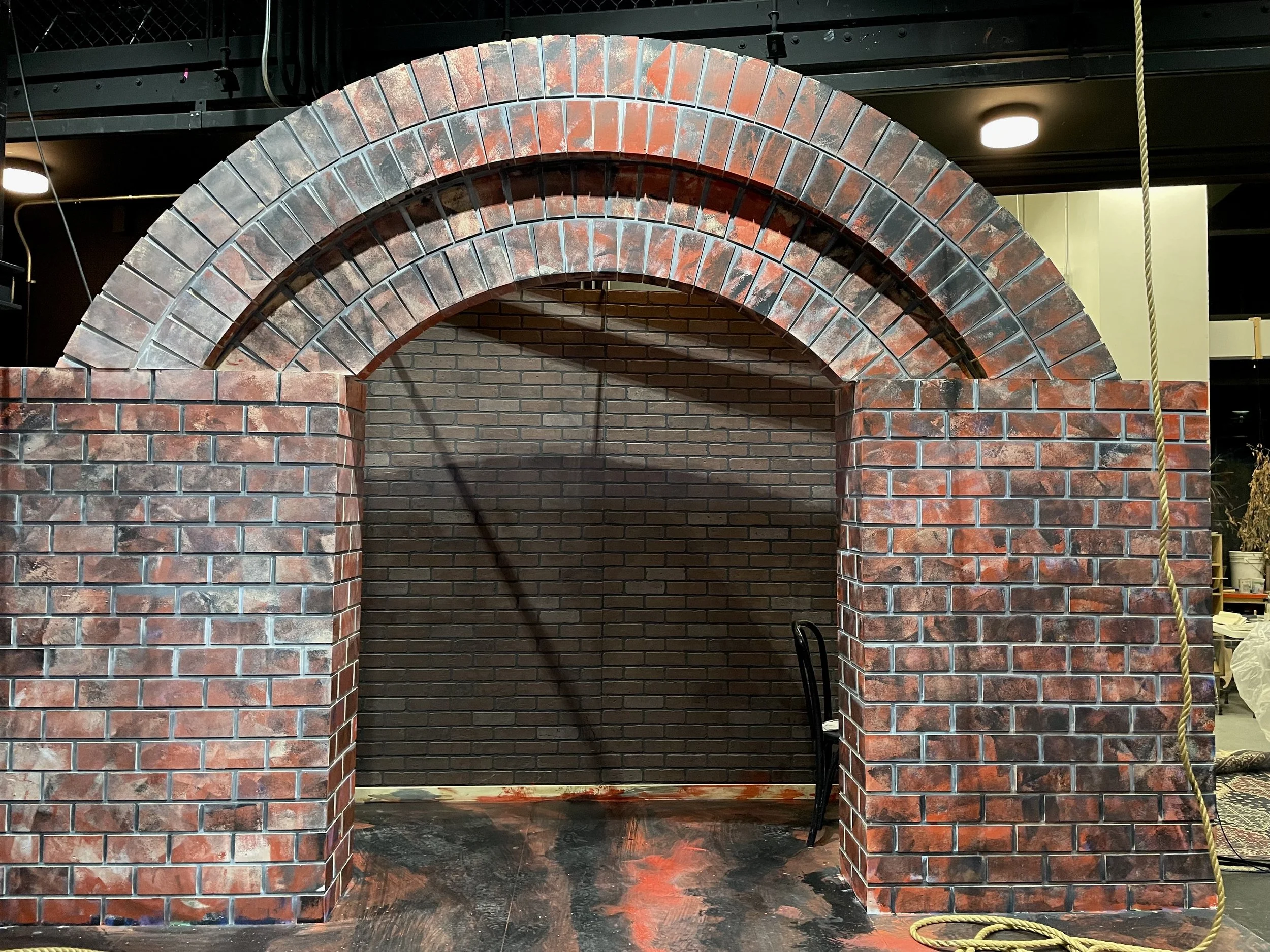
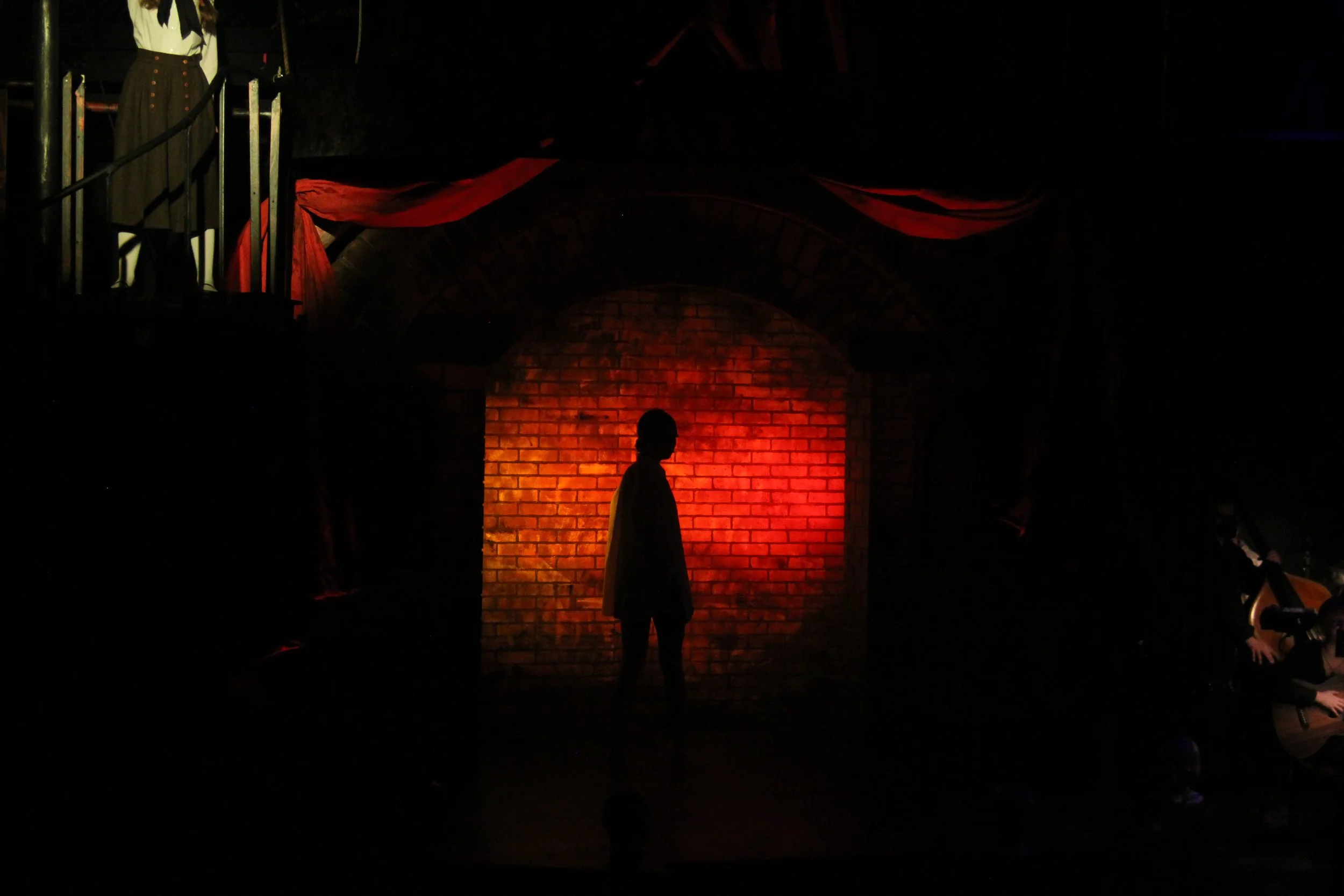
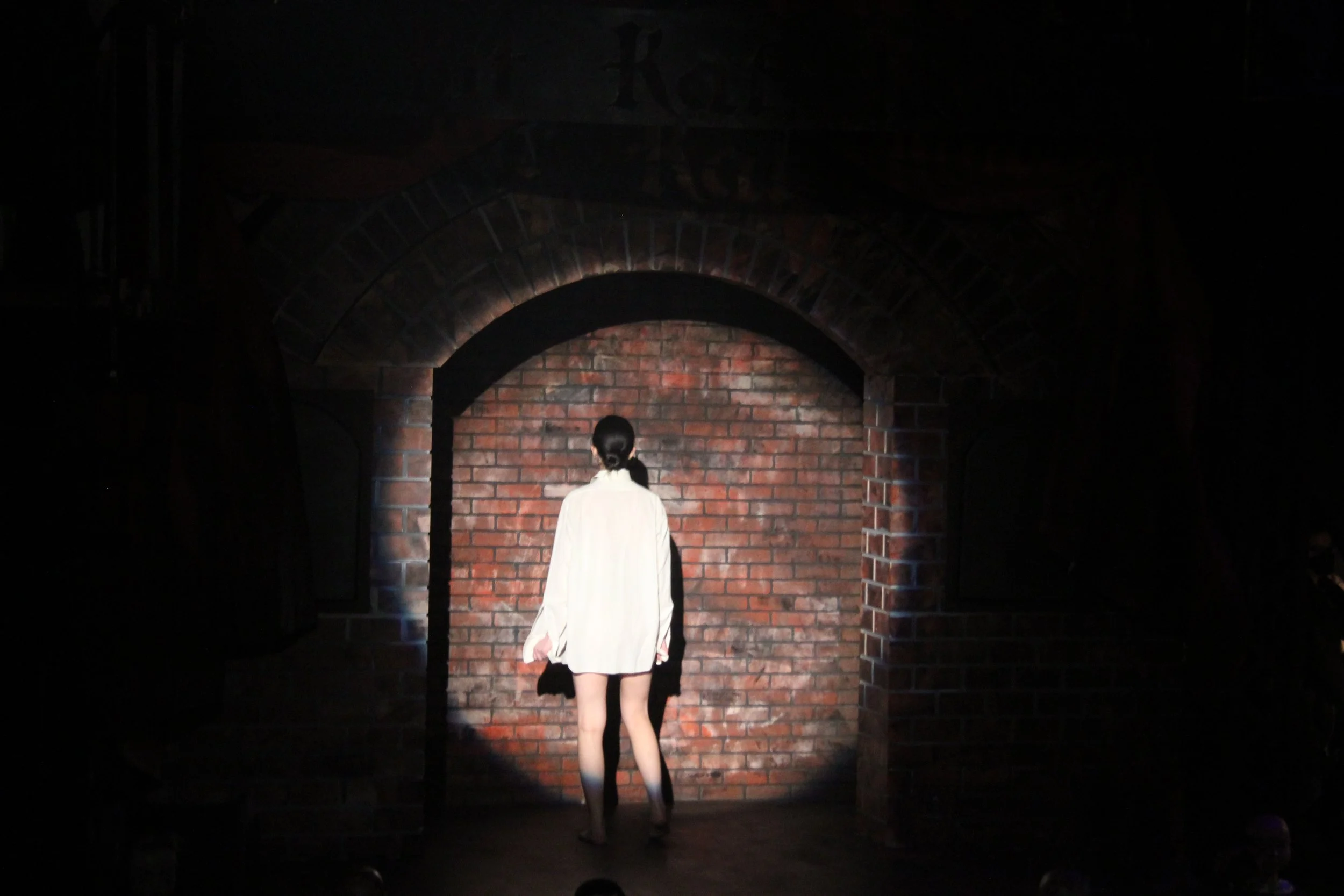
The brick archway of the Club’s stage modeled after the brick ovens of Auschwitz. For the final moment the red curtain opened to reveal the brick and the oven doors (added later)